





*Burial Fixed For Thursday
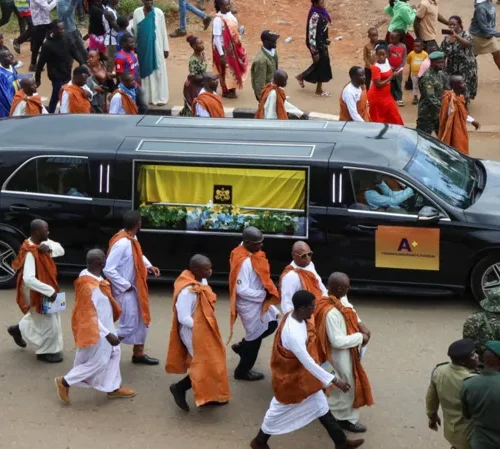
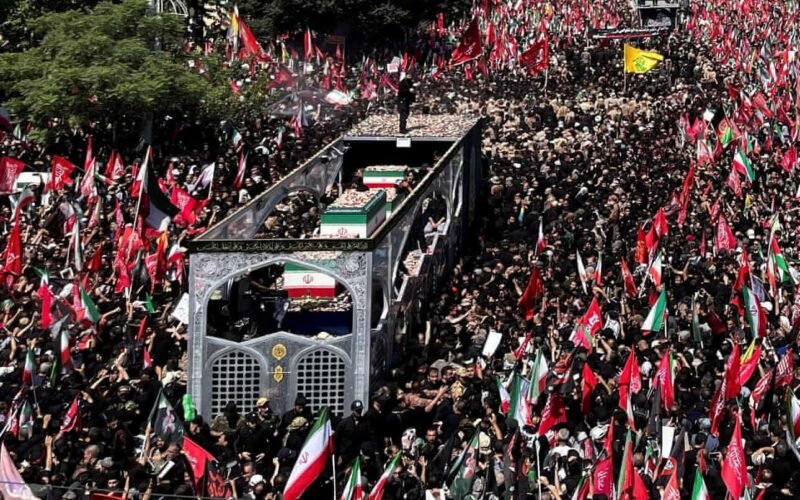
A mass funeral procession for Iran’s former Supreme Leader, Ali Khamenei, kicked off in Tehran, the Iranian capital, today.
Millions have assembled in the capital for the six-day, five-city funeral for Khamenei, who was killed on 28 February this year during the first airstrike when the US and Israel started the current war in the region. He was succeeded by his son, Mojtaba Khamenei.
The procession followed two days of public farewell ceremonies, during which there were calls for the assassination of US President Donald Trump.
Iranian President Masoud Pezeshkian praised the crowds’ behaviour and expressed hope that the images emerging from Iran would force the West to reflect on its determination to change Iran.
In other words, he said majority of Iranians still support and queue up behind the Islamic Republic theocracy and desire no other form of government.
The coffins of Khamenei and family members also killed in the strikes will make their way to Mehrabad International Airport over the course of a 12-hour journey.
Daily life has ground to a halt since national mourning began on Saturday, with authorities closing streets and air space to mark the occasion.
The procession will end on Thursday, when Khamenei will be buried at the Imam Reza shrine in Mashhad, where he was born.
Today’s procession marks a contrast with the funeral for Iran’s previous Supreme Leader Ayatollah Ruhollah Khomeini in 1989, which devolved into chaos.
According to official estimates at the time, more than 10 million people attended the funeral of Ali Khamenei’s predecessor – that’s around a sixth of the country’s population, with the Guinness World Records marking the event as the largest proportion of a country to attend a funeral.
When mourners stormed the vehicle carrying Khomeini’s body, authorities had to use a helicopter to transport him for the burial.
Crowd surges killed at least eight people and injured more than 10,000.
At Khamenei’s current funeral rites, several officials who haven’t been seen since the start of the war have made a rare public appearance for the funeral procession.
For instance, former President Mahmoud Ahmadinejad was seen during the day in what seems to be his first major public appearance since fighting broke out with the US and Israel.
The new Commander of Iran’s Revolutionary Guards Corps (IRGC), Ahmad Vahidi, attended the funeral as well as the procession, and so did Esmail Qaani, who leads the Guards’ Quds Force which oversees foreign operations.
In a feat of organisation by the state authorities and the volunteer civic army that fed and housed the mourners, no one was killed – unlike at previous state-linked funerals that rapidly descended into chaos, including that of the previous Supreme Leader.