





As many countries grapple with rising fuel costs occasioned by factors associated with the US/Israel war on Iran, Ghana has slashed the prices of petrol and diesel as part of moves to stem hardship on its citizens.
The action has reportedly sparked celebrations among the people.
A report in Ghana Graphic Online of 15 April, 2026, sighted by People&Politics, shows that the government announced “a temporary intervention” to absorb GH¢2.00 (about N244) per litre on diesel and GH¢0.36 (about ₦2.46 – ₦2.50) per litre on petrol, effective April 16, 2026 (today).
The paper further reported that the action was “a bid to shield Ghanaians from the full impact of rising global crude oil prices triggered by the ongoing Israel-US war against Iran.”
It reported that the measure, approved by the country’s cabinet and announced by Felix Kwakye Ofosu, spokesperson to President John Dramani Mahama and Minister for Government Communications, will remain in force for one month, during which the government will closely monitor global oil market developments.
The intervention comes after crude oil prices surged from $63 per barrel on 26 February, 2026, to a peak of $102 last Monday on the WTI Futures, following the closure of the Strait of Hormuz, through which approximately 20 per cent of global crude oil supply passes.
The paper quoted Ofosu as saying: “Since the beginning of the conflict, there has been significant restriction. This has led to an increase in crude oil prices and a significant increase in insurance premiums and other such costs. That is what has accounted for the increases we have seen in the last two pricing weeks.”
The announcement followed a Cabinet (Nigeria’s equivalent of Federal Executive Council) meeting chaired by President Mahama on 9 April, 2026, at the Jubilee House, where three major directives were issued to mitigate the impact of rising fuel prices.
At the meeting, Ghana Graphic added, Cabinet instructed the Ministers of Finance, Dr Cassiel Ato Forson, and Energy and Green Transition, Dr John Abdulai Jinapor, to take immediate steps to reduce fuel prices through the temporary removal of some taxes and margins within the petroleum price build-up. The adjustments are expected to take effect within the next pricing window.
“This intervention is intended to cushion customers and ease the cost burden on households, transport operators, and businesses,” the government statement read.
Additionally, the Cabinet charged the Minister of Transport, Joseph Nikpe, with ensuring the rapid deployment of newly acquired buses for Metro Mass Transit Limited, particularly on high-traffic corridors.
Ofosu reminded the public that President Mahama had announced the arrival of the first batch of 100 of the buses over the weekend, with a second batch of 100 expected in August 2026 and a final batch of 100 in November, bringing the total to 300.
Several other countries have undertaken measures to ease the burden of consequences of oil price increase on their people.
For instance, the Pakistani government, among other salutary actions, launched free public transport services in Islamabad, the capital, for 30 days and similar measures were introduced in Punjab, another major city with heavy population.
In Nigeria, President Bola Tinubu, on 10 April, during a visit to Bayelsa state in the Niger Delta, told Nigerians that his administration was working to alleviate hardships fuelled by the Middle East crisis.
His words:” Yes, I hear from you from various angles of the economy. The fuel prices are biting hard. But look around. Let’s just thank God that we are better off listening to what is happening in Kenya and other African countries, what they are going through.
“We will continue to find ways to ameliorate the suffering of the vulnerable. This is a government that cares.
“We will look at the numbers with the Ministry of Finance, Budget and Economic Planning. And we will see what we can do to ease the burden. But that is the development.”
The President’s remark was still sinking in when former Vice President Atiku Abubakar lambasted him over the international comparisons, declaring that while Kenya,a non-oil producing nation, enjoys a minimum wage of equivalent N170,000, Nigeria’s minimum wage is N70,000.
Reacting to Tinubu’s remark, Atiku, in a statement by his spokesperson, Phrank Shaibu, had said the comparison is ‘shallow’ and not only misleading but a grave distortion of the lived reality of Nigerians.
Atiku stated:”Yes, petrol prices in Nigeria may appear lower than in countries like Kenya or South Africa. But this comparison collapses instantly when placed against the backdrop of economic realities.
“Nigeria today is more expensive to live in than Kenya, with the average cost of living significantly higher, despite lower fuel prices.
“More alarming is the collapse in earning power. Kenya’s GDP per capita is nearly double that of Nigeria, and a minimum wage earner in Nairobi takes home the equivalent of about N170,000—more than twice Nigeria’s N70,000.”
Meanwhile, a litre of petrol in many filling stations across Nigeria presently goes for between N1300-N1400, with a prior cost-of-living crisis occasioned by the 29 May, 2023 removal of fuel subsidy, triggering a hurting rise in prices of goods and services.
The Nigeria Labour Congress (NLC) has since demanded for higher wages and a cost of living allowance for workers in the country.
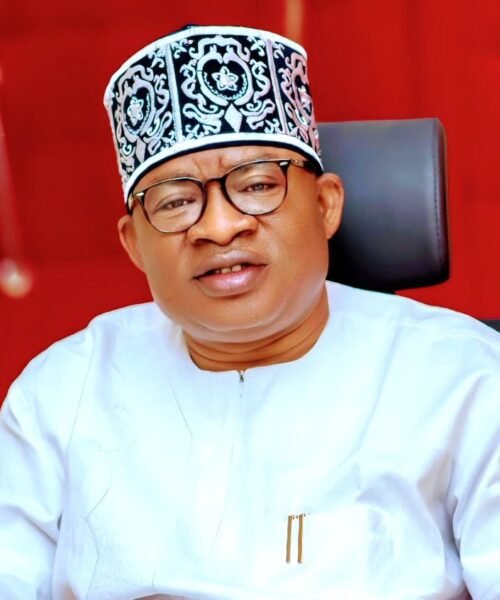
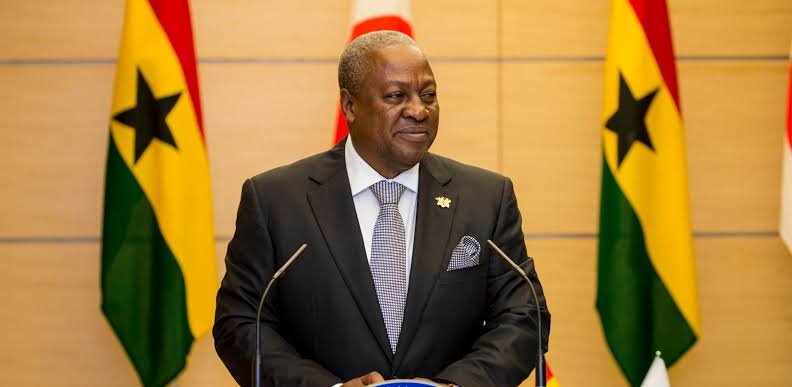
*PHOTO CAPTION: Ghana President Mahama.