












(Also published in Sunday New Telegraph of June 7, 2026)
By SHEDDY OZOENE
Last week in Enugu, a promotional campaign by COPEN Group caught my attention. The housing development company was advertising an upcoming forum on affordable homeownership, promising solutions to one of the most persistent challenges facing not only Enugu State but the entire South-East region: access to affordable housing. The housing forum, themed “A Home for Every Dream, A House for Every Pocket” is scheduled to hold next Tuesday at the Amadeo Event Centre in Enugu.
Millions of residents trapped by the high cost of owning a home, are naturally taking keen interest in the initiative. Across the South-East, the housing deficit has become one of the region’s most pressing socio-economic challenges. And while Governor Peter Mbah of Enugu State, for instance, has introduced quite a good number of innovative policies and programs in many sectors, those of affordable housing has evidently not matched the growing population in the urban areas.
The acute housing deficit is not peculiar to Enugu State. Across the South-East, the dream of homeownership is steadily slipping beyond the reach of many families. Rising construction costs, inflation, rapid urbanisation and limited access to affordable mortgage financing have combined to create a crisis that the government and private developers have struggled to address.
Yet amid these challenges, one company has spent decades attempting to provide practical solutions. COPEN Group, led by Surveyor Ugochukwu Chime, has built a reputation around the belief that affordable homeownership is not only possible but achievable through innovative financing models tailored to the realities of ordinary Nigerians.

The South-East’s housing shortage reflects a wider national problem. Nigeria’s housing deficit is estimated at over 20 million units while rapidly expanding urban centres continue to absorb growing populations without corresponding investments in affordable housing. The consequences are visible everywhere. Rent prices continue to rise. Young professionals spend years moving from one rented apartment to another. Civil servants and small business owners struggle to save enough money to build or purchase homes. Even when housing projects are developed, many are designed for affluent buyers, leaving average-income earners behind.
Successive governments at both federal and state levels have launched housing programmes aimed at addressing the deficit. While some estates and residential schemes have been delivered, their impact has remained limited compared to the scale of demand.
Against this backdrop, COPEN has emerged as one of the few developers deliberately focused on affordable housing solutions. Rather than concentrating exclusively on luxury developments, the company has invested in creating pathways to homeownership for individuals who would otherwise remain trapped in the rental market. Its philosophy is straightforward: quality housing should not be reserved exclusively for the wealthy.
This vision is reflected in the company’s upcoming housing forum, themed “A Home for Every Dream, A House for Every Pocket.” Scheduled to hold next Tuesday at the Amadeo Event Centre in Enugu, the forum aims to educate prospective homeowners about opportunities that many people either do not know exist or assume are beyond their reach.
Perhaps the most intriguing proposition is the company’s claim that residents can transition from paying rent to owning homes through innovative housing arrangements currently available in Enugu.
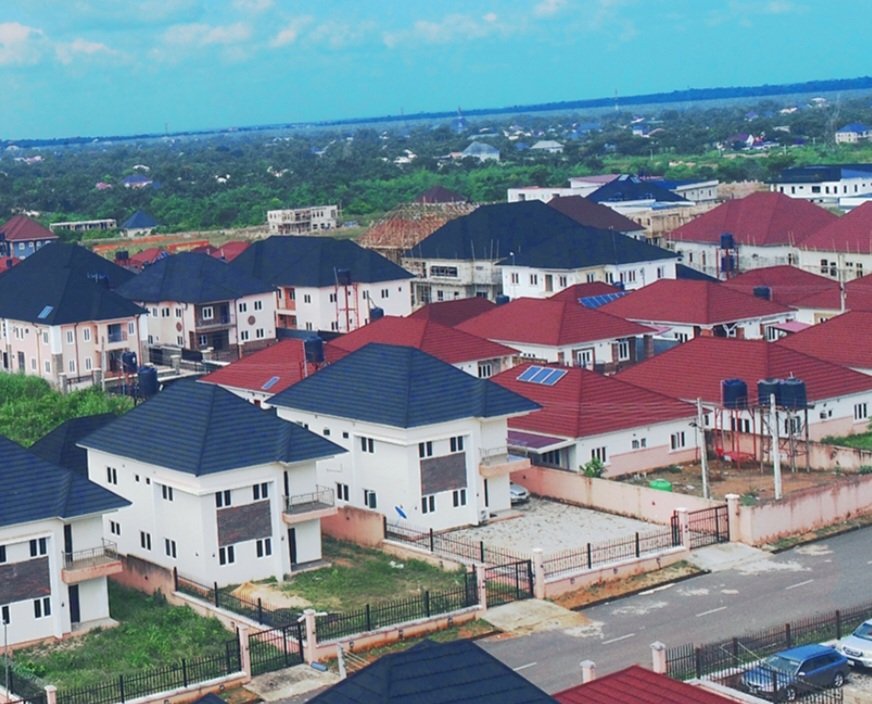
For many Nigerians, the greatest obstacle to homeownership is not a lack of desire but a lack of access. Traditional mortgage systems often impose conditions that are difficult for average-income earners to meet. By exploring alternative financing structures, developers such as COPEN are attempting to remove some of these barriers.
One of the enduring criticisms of many government-backed housing initiatives is that affordability often exists only on paper. Houses are built, but pricing structures frequently exclude the very people the programmes are intended to serve.
Private developers have become major players in housing delivery across the South-East. New estates continue to emerge around Enugu, Awka, Owerri and Aba. However, most private-sector developments cater primarily to upper-middle-class and high-income buyers. The reasons are understandable. Developers contend with soaring costs of land acquisition, building materials, infrastructure provision and financing. Faced with these realities, many naturally focus on projects that promise higher profit margins.
Unfortunately, this leaves a significant gap in the market. While luxury estates continue to multiply, affordable homes remain scarce. The result is a housing market where supply is increasing, but affordability is steadily declining. While no single company can solve the South-East’s housing deficit, initiatives such as those championed by COPEN offer important lessons.
First, affordable housing requires more than constructing buildings. It requires financing models designed around the realities of local incomes. Second, developers must move beyond the assumption that profitability and affordability cannot coexist. With proper planning, scale and innovation, both objectives can be achieved.
Third, public awareness is essential. Many prospective homeowners remain unaware of available opportunities, often assuming that ownership is impossible unless they can immediately provide large upfront payments. By bringing together industry professionals, financial experts and prospective buyers, programmes such as COPEN’s housing forum help bridge the information gap that frequently separates people from opportunities.
The South-East’s housing challenge will not disappear overnight. The gap between demand and supply remains substantial, while economic pressures continue to push homeownership beyond the reach of many families.
As governments continue to grapple with policy and funding constraints, innovative developers like COPEN are demonstrating that a different approach is possible. If the South-East is to overcome its housing deficit, the region will need more developers willing to think beyond traditional models and more public policies that support such innovation.
Lastly, the developers need to reflect a growing recognition that the future of housing lies not merely in building more houses, but in creating realistic pathways that enable ordinary people to own them.