


*Many Think Since This Is Trump’s Second Term, He Therefore Doesn’t Need To Be Re-Elected, He Might Continue The War
*’What Worries Me Is That The Regime Has Been Executing People Daily And This Is Only Getting Worse, With Or Without War’
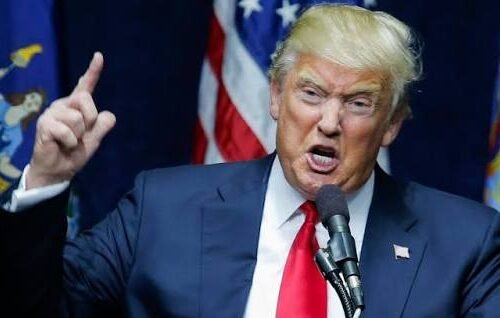
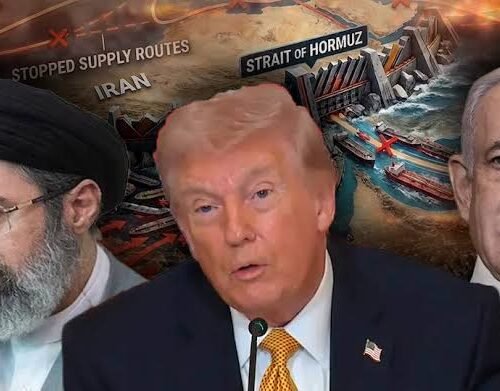
Just hours after the US midterm election results delivered a crushing defeat for the Republican Party, pro-regime crowds gathered in Tehran’s Enghelab Square to set fire to a giant banner depicting US President Donald Trump, Vice-President JD Vance, envoy Steve Witkoff and Israeli Prime Minister Benjamin Netanyahu.
Iranian officials have since issued defiant statements celebrating the Republican losses, portraying the results as a rejection of Trump’s war against Iran, reports the Guardian UK.
Iran’s Supreme Leader, Mojtaba Khamenei, whose father and predecessor, Ali Khamenei, was killed during US-Israel strikes in February, said: “The process of the US’s collapse has accelerated.”
In another display, Iranian state television broadcast footage of a mock hanging of Trump in Tehran’s Tajrish Square that featured an actor wearing a mask of the US President and an orange prison uniform.
Apprehension Inside Iran
Inside the country, however, some Iranians describe a sense of apprehension, pointing to the worsening economic situation and uncertainty over what Trump’s political setback could mean for their future.
For Mehnaz, a Tehran-based journalist, the mood is one of hopelessness, as people struggle to make sense of what lies ahead.
“I am really fearful. Of what? I still don’t know. It’s a weird feeling,” she said. “Frankly, it’s a truly strange scenario here. People have set their sights on the US and Israel, hoping that this will bring change. I found that very strange and still do.”
Some of those she has spoken to believe that Trump’s midterm loss could make another full-scale war more likely.
“Many think since this is Trump’s second term, and he therefore doesn’t need to be re-elected, he might continue the war,” she said. “But what worries me is that the [Iranian] regime has been executing people daily and this is only getting worse, with or without war.”
According to the Oslo-based NGO Iran Human Rights (IHR), Iranian authorities have executed at least 696 people this year.
Alborz, a 36-year-old writer in Tehran, said the appearance of ordinary life masked an increasingly precarious reality.
“In the shops, people can still be seen browsing for clothes and other goods, just as before. Yet actual purchases have become rare, and a single T-shirt now costs what a full suit might have set you back a year ago,” he said.
“Amid the banter and everyday chatter, you overhear passersby debating whether a kerosene heater is better than a wood-burning one, readying themselves, in their own way, for the possibility that the infrastructure may one day be destroyed.
“It is a resilience born of compulsion. There is nothing noble in it,” added Alborz.
Unlike those who fear Trump’s defeat could bring renewed conflict, Alborz said people around him appeared to believe the likelihood of another full-scale war had diminished.
“There’s a general feeling that with what happened in the US election and with Israel, the likelihood of a full-scale war resuming has decreased. Still, no one is certain,” he said.
But while Iranians who are opposed to the government differ over whether another war is likely, a common fear among those interviewed is that the repression at home will continue regardless of what happens in the US.
For Noor, 24, a resident of Karaj who spent three weeks in prison after taking part in protests in January, that fear has only intensified.
“They arrested me during the war, so their repression mechanism is like a well-oiled machine which won’t stop working whether it’s under clouds or bombs,” she disclosed.
Asked how she felt about the days ahead following Trump’s midterm defeat, she said uncertainty had become a part of life.
“If someone tells you inside the country what they predict will happen next, they are lying. No one, absolutely no one, knows what will happen. We have been preparing for the worst all year.
“But I know what won’t happen: This repression will not end,” said Noor.
Moein, a medic in central Iran, believed the US and the West underestimated the strength of Iran’s Islamic Revolutionary Guard Corps (IRGC), particularly the loyalty of its personnel and its strategic capabilities.
“Even I underestimated how powerful and strategically well placed the IRGC is,” he said. “I used to think, or, at least, like to think, of the whole system as fossilised mullahs and corrupt, out-of-touch military men. But it’s clear to me now that they’re somewhat competent. And still loyal, despite how corrupt they can be.”
For Moein, that recognition has brought a bitter sense of contradiction: “A state capable of enduring decades of sanctions and confronting the world’s most powerful military, yet willing to turn its coercive machinery against its own population, it’s a shame, really. For them to fight back against the sole superpower of the world and last half a century under sanctions, only to kill young girls in the streets.”
Asked whether he expected world leaders to react to the continuing repression in Iran, he said he had fewer and fewer expectations of the European leaders.
For Mehnaz, the celebrations by pro-government crowds were only getting more “outrageous” by the day. “And why won’t they celebrate? They [IRGC] have just found a hope for survival,” she said.
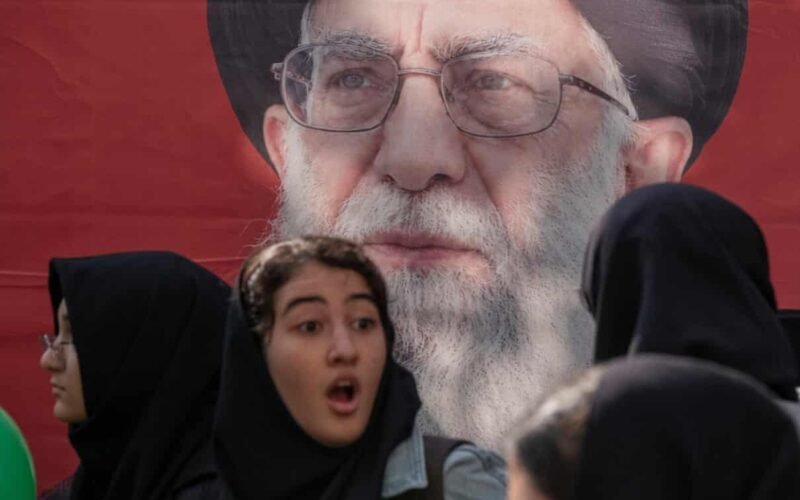
*PHOTO CAPTION: Schoolgirls walk past a portrait of Iran’s late Supreme Leader Ali Khamenei during an a pro-government rally… on Wednesday.