


By Ike Abonyi
Following a recent podcast portraying the Nigeria Democratic Congress (NDC) presidential candidate, Peter Obi, as an Aminu Kano reborn because of their shared philosophy towards the poor in society, there have been some remarks supporting this fact and even going further to adduce other reasons why the Aminu Kano cap squarely fits Peter Obi.
The Aminu Kano cap is more than a piece of traditional attire that represents a commitment to the poor, modest living, social justice, and a political philosophy that places ordinary people at the centre of governance. When Peter Obi wears it, the symbolism invites a wider conversation about the relationship between leadership, social inclusion, and national unity.
The comparison between Aminu Kano and Peter Obi rests on three themes: Concern for the poor, modesty in public life, and the need to make every Nigerian ethnic group feel that the country belongs to them.
This last segment of the commonality between Obi and Aminu Kano seeks to deepen the conversation, especially as Obi’s running mate, Rabiu Kwankwaso, is from Kano.
A further dimension emerges when the ethno-political histories of Nigeria are thoroughly X-rayed.
Aminu Kano and Obi are of the Hausa and Igbo tribes, respectively. Ethnicity has been a significant factor in Nigerian politics as political power is examined alongside the distribution of Nigeria’s highest political offices along ethnic lines since 1999.
In terms of population, the six biggest ethnic groups in Nigeria, in this order, are the Hausas, the Yoruba, the Igbos, the Ijaw, the Kanuri, and the Fulani.
From 1999 to date, all but the Hausas and Igbos have tested political power in this country at the level of President and Vice President.
Yoruba—12 years as President (Olusegun Obasanjo and Bola Tinubu), eight years as Vice President (Yemi Osinbajo); Fulani—11 years as President (Umaru Yar’Adua and Muhammadu Buhari), 11 years as Vice President (Atiku Abubakar and Namadi Sambo); Ijaw—five years as President and three years as Vice President (Goodluck Jonathan); Kanuri—four years as Vice President (Kashim Shettima).
These historical statistics raise a question worth discussing as the country searches for lasting political unity and stability.
Can a political partnership between a prominent Hausa leader and a prominent Igbo leader help address longstanding feelings of exclusion and strengthen the idea of a common Nigerian identity?
Aminu Kano, a Hausa, was a northern political reformer associated with social justice and the interests of ordinary people.
Peter Obi is a contemporary politician whose public message emphasises prudent management, accountability, and poverty reduction.
Aminu Kano’s political legacy is closely associated with challenging entrenched privilege and advocating for disadvantaged people. Peter Obi has also built much of his public political message around frugality, accountability, and improving the living conditions of ordinary Nigerians.
Their historical contexts are different, and their records should be assessed on their own merits.
Nevertheless, the comparison provides a useful framework for discussing a shared political ideal: government should serve the people, particularly those who have the least access to power and opportunity.
The cap, therefore, can be interpreted as a symbolic expression of solidarity rather than merely a fashion statement. Its significance lies in the values it evokes and the actions that those values demand.
The following table illustrates the ethnic backgrounds commonly attributed to Presidents of the Fourth Republic:
*Olusegun Obasanjo, 1999–2007 Yoruba.
*Umaru Musa Yar’Adua, 2007–2010 Fulani.
*Goodluck Jonathan, 2010–2015 Ijaw.
*Muhammadu Buhari, 2015–2023 Fulani.
*Bola Ahmed Tinubu 2023–present Yoruba.
This history supports an important distinction in the argument: the Igbo have not held the executive presidency since the restoration of democracy in 1999. Ditto for the Hausa; even the dragging together of Hausa and Fulani challenges this assertion, but empirically it has been Fulani dominating.
Consequently, a credible political analysis should distinguish Hausa identity from the broader Hausa-Fulani political category, rather than treating them as interchangeable.
The key point remains whether Nigeria’s political arrangements adequately recognise the country’s many ethnic communities and whether access to the highest offices helps citizens feel that they belong to one nation.
The experiences of presidential representation since 1999 differ. The Yoruba, Fulani, and Ijaw have had people commonly identified with their respective communities occupy the presidency.
The Igbo have not held the executive presidency, while the historical classification of Hausa and Fulani leaders requires care.
It is therefore more precise to frame the question around the uneven distribution of national political power and the enduring perception of exclusion, rather than claim that all six groups have equal political standing or that every group has been completely excluded from the number one and number two offices.
If, therefore, Aminu Kano and Peter Obi’s political philosophy prioritises poverty reduction, education, employment, public accountability, and access to essential services, their partnership could offer a common policy platform that crosses ethnic boundaries.
The substance of their policies and implementation records would matter more than symbolism alone.
In Obi and Aminu Kano’s philosophy, citizens who feel overlooked by the political system may attach importance to visible recognition of their communities.
A cross-ethnic partnership could create an opportunity to address those concerns, provided it is inclusive of other ethnic groups, regions, and religious communities as well.
Nigeria’s minorities and many other communities also have legitimate concerns about representation.
In conclusion, the Aminu Kano cap on Peter Obi can serve as a reminder that the struggle for a more inclusive Nigeria is not the property of one ethnic group or political tradition.
It invites reflection on the relationship between social justice, modest leadership, and national belonging.
The historical question of Igbo representation in the executive presidency is real. The broader question of Hausa representation, however, must be stated with greater precision because Hausa and Fulani identities are distinct even where political classifications overlap.
An Obi–Kwankwaso partnership would carry potentially significant symbolism, but its contribution to unity would depend on its policies, its treatment of all communities, and its ability to make citizens feel included in the national project.
The ultimate test of Nigeria’s unity is not whose cap a leader wears, but whether every Nigerian—Hausa, Igbo, Yoruba, Ijaw, Kanuri, Fulani, and the many other communities—can see a place for themselves in the country’s leadership, opportunities, and future. God help us.
*Ike Abonyi is Editor @Large.
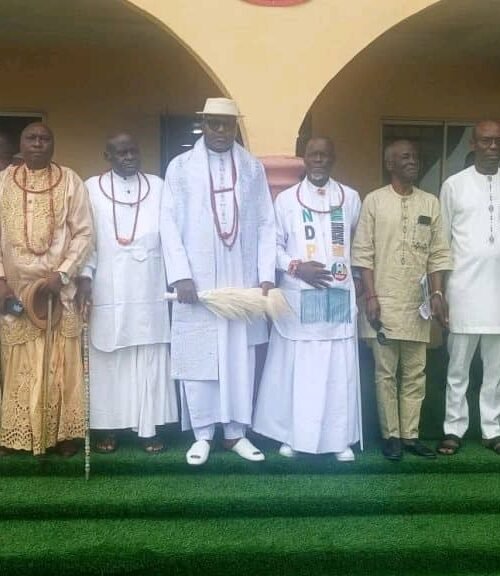
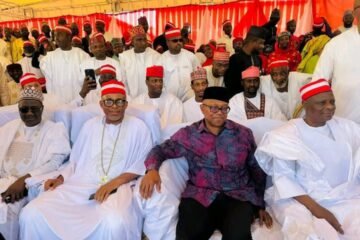
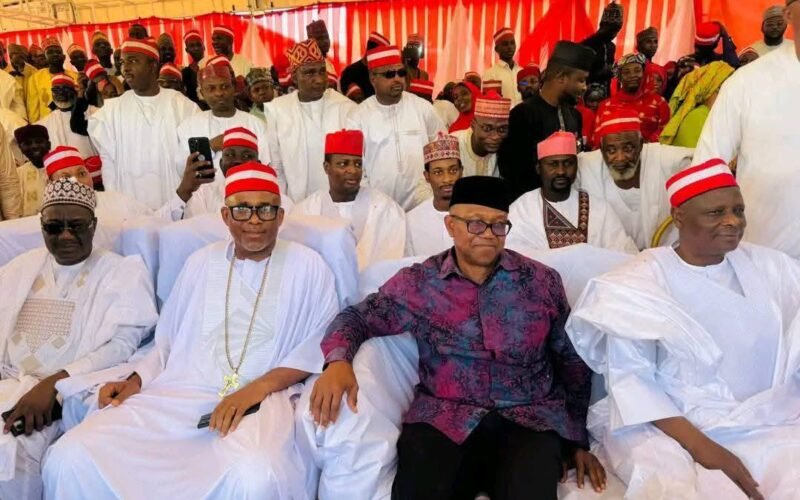
*PHOTO CAPTION: R-L, front row: Kwankwaso, Obi, and other Northern leaders, at a meeting in Kano.