




By our reporter
The media team of Directorate of Road Traffic Services (DRTS) of Federal Capital Territory Administration (FCTA) imbibed additional skills in media relations and freshened up their perception/reputation management knowledge during a workshop at the organization’s corporate headquarters in Mabushi, Abuja.
The workshop, which held yesterday, was titled ‘Media/PR Skills In Corporate Governance’.
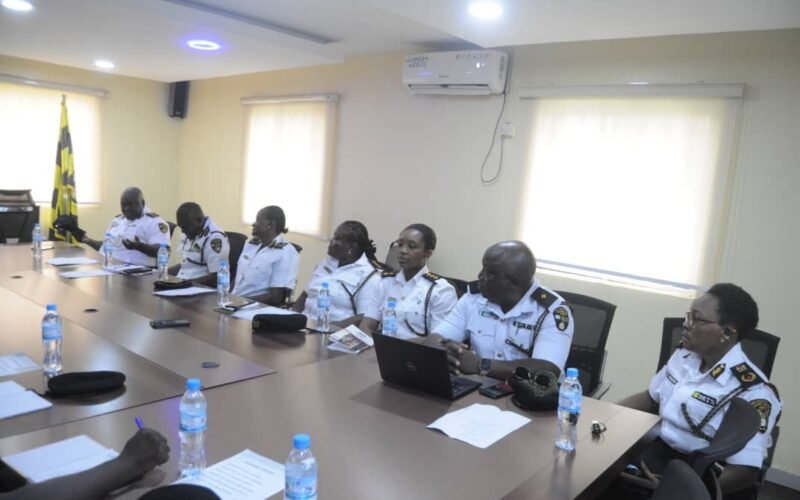
It was a robust interactive session with questions and answers flowing freely as the DRTS personnel, smartly attired in their white tops, eagerly soaked in new techniques and capacities to deliver better services to FCT residents and bring further credit to the organization and FCTA.
The training program, which held at the conference room of the organization, was approved by the Director of DRTS, Alhaji Abdullahi Yeldu.
Throwing the curtains open for the event, the Director thanked Minister of FCT, Barrister Nyesom Wike, for fostering a conducive atmosphere for effective service delivery.
He urged the personnel to listen carefully and internalize the skills knowledge to be imparted by the resource person, Mr. Felix Durumbah, a former Assistant Director (Information) with FCTA and presently, Editor of PeopleandPolitics, one of Nigeria’s leading online newspapers, saying they have positive things to learn from the professional who possesses a strategic mix of public and private sector experience at the top.
Represented by the Deputy Director, Human Resource Management (DD, HRM), Mr Henry Kwapyong, the Director justified the workshop as being due to the fact that more is expected of the information officers in the line of duty.
He noted, however, that information officers “despite the very significant work you’re doing”, do not often have commensurate respect accorded them, but implored them to disregard distractions and stay focused on their duty mandate as no effort will go unrewarded in the end.
Drawing from an incident in a bus, the Director alluded to the vital importance of information officers in any system or process.
He said: “The story was told of two women in a bus. They were arguing and insulting each other about the seat; everybody wanted to sit on a particular seat, and they were disturbing other people in the bus.
“So the driver parked the bus and talked to them and said ‘if you know you’re the ugliest among the two, go and sit down’.
“And the two women not only stopped fighting, they did not sit. But there was peace in the bus. I know people always look down on drivers; they think if you’re a driver, you’re a nobody.
“But look at the time, the moment and the period he applied wisdom to bring peace.
“So, that’s the work of information officers. You might not be the greatest, you might not be the most recognized in society, but you must always apply your wisdom, your knowledge, at the right time to provide the needed information so that it can bring peace to the society, to the country and your environment.”
Furthermore, Alhaji Yeldu cautioned the officers against misinformation and negativity, pointing out that there are known global disasters triggered by acts of misinformation.
He urged them to be careful in information dissemination, processing and management, imploring the officers to “know when and where you’ll be able to apply your knowledge.”
Alhaji Yeldu, however, expressed high optimism that after the workshop, the officers will be able to handle their job schedules better and also understand “how we can bring, first, DRTS to limelight, and the society and Nigeria, as a whole, for sustainable development.”
Taking his turn, Mr. Durumbah, who described the information officers collectively as “the face of the organization”, and deploying PowerPoint, put them through various aspects of the topic at hand.
Alluding to renowned schools of thought, he started by giving varying, but ultimately interrelated, definitions of the concepts of ‘Media/PR Skills’ and ‘Good Governance’.
The workshop then went into full flow, with the resource person dwelling on the expectations for a media/PR person in an organization; the vital technical and professional tools to be deployed in gathering, processing, disseminating and managing relevant information; the imperative to frequently engage with the media and other stakeholders who form the different publics of the organization; the phenomenally important role of top management in such engagements; corporate benefits of such interface; and how these generate and sustain good corporate governance.
Mr. Durumbah cited several past instances in parts of the country where inability, unwillingness, and/or incapacity to deploy timely, relevant, effective and efficient media/PR skills by persons concerned had culminated in unwanted, even disastrous, consequences, exhorting the DRTS officers to always be up and doing.
On his part, Head of PR, DRTS, Mr. Kalu Emetu, during the question-and-answer segment, underscored the Director’s words, urging the staff members to use the knowledge gained for the benefit of DRTS, FCTA and the country.
He called for greater dedication to service and then, alongside the resource person, addressed posers raised by the staff members.
Some members who spoke, profusely thanked the Director for approving the workshop, saying they had learned many fresh perspectives on how to deliver better services, promising to apply what were learned to make a difference.
They made a case for a separate workshop for DRTS top management by the resource person, saying there were certain issues highlighted by the resource person and which, they noted, were critical to good corporate governance. According to them, only the management is in the best position to facilitate such.
Copies of the workshop materials were later forwarded to the individual officers for sustained home study and as refresher tools.
*PHOTO CAPTION: Mr. Kwapyong (left) addressing the workshop as a cross section of participants listen with rapt attention.