











By Tony Ezimakor, Abuja
As the Independent National Electoral Commission (INEC) mobilizes resources for the 2027 general elections as part of its readiness assessment tour, Prof Joash Amupitan, the Commission’s Chairman, has directed the review of its Continuous Voter Registration (CVR) records in the South-East
He equally ordered a review and removal of every obstacle to the distribution of the Permanent Voters Cards (PVCs) in the zone and ensure no registered voter is disenfranchised during the coming polls.
Prof Amupitan gave the directive on Tuesday in Enugu at the South-East zonal interactive meeting with staff and readiness assessment for 2027.
He said the Commission’s “primary operational focus in the South-East is to review our local CVR records and dismantle every bottleneck affecting Permanent Voters Card (PVC) distribution.”
The Chairman stressed that the Commission’s position on the matter was firm.
“Our objective is uncompromising: no eligible citizen who registered should be disenfranchised by administrative or logistical friction,” he declared.
He noted that the National Register of Voters now stands at over 103 million registered citizens.
Prof Amupitan recalled that, in line with Section 10 of the Electoral Act 2026, the Commission conducted three structured phases of the CVR exercise.
According to him, Phase I, which ran from 25 August 2025-10 December 2025, registered 2,611,266 voters; while Phase II, held between 5 January 2026-17 April 2026, registered 4,121,835 voters.
He added that Phase III, conducted from 11 May 2026-26 July 2026, registered 3,867,997 voters.
The Chairman said the figures brought the total number of new registrants to 10,772,421 citizens, subject to what he described as final Automated Biometric Identification System (ABIS) de-duplication verification at the National Headquarters.
He disclosed that in the third phase, the Commission introduced, for the first time in Nigeria, the Online Registration Portal, a technology designed “to eliminate barriers of distance and time.”
The Chairman further said the Commission had activated Printable PVC technology in line with Section 18 (1) of the Electoral Act 2026, adding that the innovation ensures that “waiting for months to pick up a voter’s card becomes a relic of the past.”
The Enugu engagement, which is the third in the Commission’s nationwide readiness assessment tour, followed the South-West edition in Lagos on 7 September 2026 and the North-West edition in Kaduna on 28 September 2026.
Prof Amupitan said the visit was significant because no INEC Chairman had visited the Enugu office since 1999.
He said that for over two decades, zonal preparations of such magnitude were coordinated through delegated structures or handled at the level of National Commissioners and headquarters’ directorates.
“Today, as we bring our nationwide tour to the South-East, we continue to break that tradition of remote governance,” he said.
The Chairman explained that he was in Enugu in person, accompanied by National Commissioners, some of his technical aides and Directors from the National Headquarters, because “the true success of any election is not decided solely in the meeting rooms of our headquarters in Abuja. It is decided in the field.”
He said the outcome of elections is determined across the 95 Local Government Areas (LGAs) of the South-East, in the Registration Area Centres (RACs) and at the polling units by Electoral Officers, Heads of Departments, technical leads and administrative staff.
Prof Amupitan told participants that he had come to Enugu “to meet you directly, listen to your operational realities, and align our steps as we advance our collective march toward the 2027 General Elections.”
He reminded the officials that the elections would be “a simultaneous, national assignment across 36 states and the Federal Capital Territory, involving over 103 million registered voters and 176,846 polling units.”
The Chairman noted that the Presidential and National Assembly Elections are scheduled for Saturday, 16 January 2027, while the Governorship and State Houses of Assembly Elections will hold on Saturday, 6 February 2027.
“The statutory timeline is fixed, and the clock is ticking,” he said.
He disclosed that the Commission held a World Press Conference and National Stakeholders’ Engagement in Abuja two weeks ago to mark 100 days to the first ballot.
According to him, of the 14 major statutory milestones in the Revised Timetable and Schedule of Activities, nine have been successfully executed.
On the Commission’s recent performance, Prof Amupitan commended staff members for the conduct of the Osun State off-cycle Governorship Election and the off-cycle elections in Anambra and Ekiti States. He also cited the FCT Area Council polls and 16 federal and state bye-elections.
He said the public praise the Commission received from those exercises “belongs to you, the men and women in this room and your colleagues across the states.”
The Chairman, however, cautioned that “success is a demanding master,” adding that “the praise of yesterday raises the expectations of tomorrow.”
Turning to the operational environment, Prof Amupitan identified a lingering public trust deficit, voter apathy and the rising tide of misinformation and disinformation as the Commission’s greatest challenges.
He warned that “a single malicious fake news post, an unverified rumour, or a deepfake video can travel across millions of screens in seconds.”
He said false narratives only gain traction when the Commission’s administrative execution falters.
“The conduct, competence, and character of our staff in the field are either our strongest defence against fake news, or its biggest catalyst,” he stated.
The Chairman said the Commission’s response would be “proactive transparency, swift official communication, and uncompromising operational precision at every polling unit.”
On election security, Prof Amupitan said the Commission’s partnership with the Inter-Agency Consultative Committee on Election Security (ICCES) had been reinvigorated and expanded.
He said INEC was working with security agencies at national and state levels, using its Election Risk Management (ERM) tools, to develop “a robust, intelligence-driven security architecture.”
According to him, the Commission recently identified potential risks to its ad hoc staff, especially Youth Corps members, and has taken measures to neutralise the threat.
He disclosed that, through the intelligence of the Department of State Services (DSS), the people behind the plot had been uncovered and arrested, and would be prosecuted soon.
The Chairman added that the Commission plans to host a Security Conference “very soon” to address further issues relating to election security.
Prof Amupitan said the zonal engagement would involve departmental sessions led by Directors across seven core pillars.
These are voter registration and PVC collection management; technological upgrades and result verification frameworks; enforcement of the code of conduct; neutrality; adherence to lawful procedures; field logistics; and direct state situation reports.
On technology, he said the Commission was refining its Result Management Systems, including the newly introduced eEC8A electronic verification platform. This, he said, is to ensure that “from the polling unit to the national collation center, the journey of every single vote is visible, verifiable, and validated in real time” via the INEC Result Viewing Portal (IReV).
On discipline, the Chairman said: “Partisan leaning, administrative negligence, extortion, or compromised ethics will not be tolerated under my leadership.”
He reminded staff members that Section 26 of the Electoral Act 2026 requires all INEC employees, Electoral Officers, Presiding Officers, Returning Officers and participating security officials to swear an oath of loyalty and neutrality.
“The question governing your actions must never be ‘Who will benefit from this decision?’ The question must always be ‘What does the law require me to do?’ “, he said.
On logistics, Prof Amupitan said the Commission had procured and dispatched brand-new operational pick-up vehicles to State Offices and LGAs nationwide under a zero-failure protocol.
He added that new official vehicles were being procured for Administrative Secretaries, and that the Commission had constituted the Electoral Logistics Committee (E-Loc), chaired by Rear Admiral Jamila Malafa (rtd).
The Chairman also said the Commission was combining physical training with new ICT-based tools to prepare ad hoc and permanent staff for their roles.
On staff welfare, he said the Commission created the Consolidated Election Management Body Salary Structure (CEMBSS), taking its workforce out of the regular Civil Service structure with effect from 1 January 2026.
He added that the Commission is at an advanced stage of implementing a new salary and welfare package for staff members, Commission Members and Resident Electoral Commissioners. He said monthly overhead allocations to State Offices were increased by 150% effective 1 July 2026.
“We are providing you with the tools, the vehicles, the technology, and the financial backing required to excel,” he said. “In return, the Commission demands nothing less than absolute neutrality, unassailable integrity, and operational excellence.”
Prof Amupitan urged the officials to know the law, understand their responsibilities, remain neutral, document their actions and protect the process.
He said the officials were the link between the law and the voter.
“To the voter in a rural ward or an urban center, INEC is not the Chairman in Abuja; INEC is you,” he stressed.
Declaring the engagement open, the Chairman expressed confidence that the Commission was equipped to deliver a credible election.
“The road to 2027 passes through our hands, and we shall not falter,” he said.
The event was attended by National Commissioners, Resident Electoral Commissioners from the South-East states, the Acting Director-General of The Electoral Institute (TEI), Directors from the National Headquarters, Administrative Secretaries, Technical Aides to the INEC Chairman, Electoral Officers, Heads of Department, heads of security agencies and members of the media.
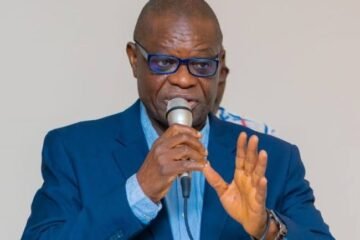
*PHOTO CAPTION: Prof Amupitan.