





(Also published in New Telegraph, Sunday October 11, 2026)
By SHEDDY OZOENE
During the just-concluded 22nd All Nigeria Editors Conference in Enugu, copies of a book titled ‘A Thousand and One Reasons Why Dr. Peter Ndubuisi Mbah Should Be Re-elected as Governor of Enugu State’, were distributed to delegates by Mr. Onyekwere Nwobodo, Special Adviser on Media to Governor Peter Mbah.
The 222-page book compiled by Governor Mbah’s aides, was unveiled by the governor on September 9 at the International Conference Centre, Enugu. It is essentially a compendium of the achievements the administration wants voters to consider as it seeks a second term.
The list is impressive: roads, schools, primary healthcare centres, Enugu Air, the New Enugu Smart City, security infrastructure, increased internally generated revenue and higher capital expenditure, among others.
Mbah’s supporters have given Enugu voters 1,001 reasons to vote for him again. With more than 10,000 projects reportedly executed or ongoing across the state, they would appear to have made a compelling case for a second term. But I think there is yet a 1,002nd reason, and it lies in what is clearly the weakness of the opposition field.
A glance at the political landscape as Enugu prepares for the February 6, 2027 governorship election raises a question: who among the challengers has the political structure, public profile and clearly articulated programme to mount a serious challenge to Peter Mbah? If one can reduce it to a question, it would be: If Peter Mbah is voted out, who is out there to replace him?
It sounds like a simple campaign question but it is not. It goes to the heart of what the 2027 governorship election should be about. Elections are not only about rejecting an incumbent or faulting his performance. They are also about choosing an alternative. The opposition must therefore convince voters not merely that Mbah has failed in some areas, but recommend a replacement capable of doing better.
Each time the argument comes up, thoughts turn to two of the better-known challengers: Chief Uche Nnaji of the Peoples Democratic Party (PDP) and Chief Chinyeaka Ohaa of the National Democratic Congress (NDC). The compelling question to ask is: how suitable are they and how prepared are they as replacements for Peter Mbah?
Nnaji is certainly not an unknown quantity. He has been active in Nigerian politics for years. He was the APC governorship candidate in 2023 and came third behind Mbah and Labour Party candidate Chijioke Edeoga. He later moved to the PDP after Mbah’s defection to the APC. That history makes him one of the more serious challengers to the governor. But political experience is not the same as readiness for governance.
Nnaji now has to persuade Enugu voters that he is the better man for the job at a time when his political image has been badly bruised by the certificate controversy and the legal proceedings arising from it. His supporters can argue that the controversy should not define his candidacy and that the election should be about the future of Enugu. They can also point to the PDP’s long-standing grassroots structure and electoral history in the state.
Those are legitimate arguments. But they do not answer the bigger question: What exactly does Uche Nnaji want to do differently and what policies has he put forward for people to consider?
The same challenge confronts Chinyeaka Ohaa.Ohaa brings considerable public-service experience to the contest. He is a former Accountant-General of Enugu State and a retired Federal Permanent Secretary. He also contested the governorship in 2023 before withdrawing from the race midway. That experience should give him something substantial to offer voters. But public-service credentials alone do not make a governorship campaign. What is the central idea around which his campaign is built?
There is also the question about Ohaa’s previous association with Governor Peter Mbah. Yes, Politics permits people to change sides, and nobody should be permanently imprisoned by yesterday’s political associations. But when a politician moves from being close to an incumbent to presenting himself as the alternative to that same incumbent, voters are entitled to ask: What changed? Was it policy, or clash of principles, or raw political calculation?
Like Nnaji, the public conversation around Ohaa’s candidacy has so far been dominated more by political manoeuvring, party realignment and controversy than by a clear and compelling programme for Enugu State. He has in less than one year, jumped from the PDP, to the ADC, before finally perching on the NDC platform, with Peter Obi’s pictures as a major campaign tool.
It brings us to the inescapable conclusion: Uche Nnaji and Chinyeaka Ohaa have not been convincing that they have what it takes to challenge Mbah. Worse still, none appears to have any laid-out program that provides clear alternatives to Mbah’s records. So far, none has strongly discredited the list of the governor’s 10,000-plus projects in that compendium or controverted in any credible manner, his assertions on the political and socio-economic direction of the state.
The 2027 election cannot be won simply by telling Enugu people not to vote for Peter Mbah. They must be given a reason to believe that the alternative will be better, and they have not. After almost four years in office, the governor’s record is now available for public examination. The roads, the schools and the healthcare projects are there. Enugu Air is there. The Smart City project is there, so is the Command and Control Centre. His economic and financial policies are also there to be examined and debated.
Don’t get me wrong: none of these makes Mbah a perfect governor. Indeed, I always suggest that his administration’s policies and programs must be subjected to serious scrutiny.
One area that deserves particular scrutiny, in my view, is taxation. There are growing complaints from individuals and businesses about the heavy economic burden imposed by the state’s tax policies. When Mbah celebrates the growth of the state’s internally generated revenue from less than ₦50 billion per annum to about ₦406 billion within three years, he should also be prepared to answer questions about the cost of that increase on the common people.
How much of the additional revenue has come from genuine economic expansion, and how much has come from struggling small businesses, many of which have been forced to close down under the excruciating burden of taxation?
The governor’s opponents are definitely not doing enough to question his policies. Rather than the unnecessary grandstanding, they should wake up and challenge the administration’s figures. They can point to failures, unpopular decisions and unmet expectations. They can question, for instance, the wisdom in the ongoing bazaar in political appointments in the state; the sudden rush of political patronage that has seen hundreds of party men and women appointed into all manner of improvised political positions as the election approaches. They can question the continued neglect of 9th Mile, the once-vibrant industrial hub of the South-East. 9th Mile which hosts some of the region’s industries, has been the state’s economic nerve-centre from which the bulk of the IGR comes from. Now the area lies waste, almost, with the roads near-impassable.
That is what elections are for: to put the government under examination.
But the opposition must do more than examine the incumbent. It must present a convincing alternative. And this is where the current contest appears increasingly difficult for Mbah’s challengers.
I would not argue for re-electing an incumbent simply because his opponents are weak. That would be an unfair standard for democracy. Governments should earn re-election, not inherit it because the opposition failed to produce a credible alternative. But the reverse is also true: an incumbent’s greatest political advantage can sometimes come not from his own strength, but from the weakness of those seeking to replace him.
That appears to be the situation in Enugu. And that, for me, is the one thousand and second reason Peter Mbah is likely to be returned to Government House in 2027.
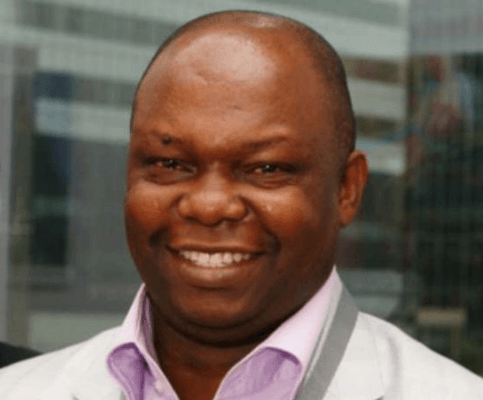
Sheddy Ozoene, Editor-In-Chief of People&Politics, is Vice-President (East) of the Nigerian Guild of Editors