










By Aloy Ejimakor
The long-running dispute between Nigeria and Sunrise Power over the 3,050MW (later rescoped to 1,500MW) Mambilla Hydroelectric Power Project, serves as a textbook study in institutional exposure to legacy liabilities.
Although the International Chamber of Commerce (ICC) arbitral tribunal in Paris dismissed Sunrise’s $2.35 billion claim and its secondary $400 million settlement default claim and ordered the claimant to pay Nigeria’s legal costs, the 23-year Mambilla saga exposes structural vulnerabilities in how the government executes contracts and handles out-of-court settlements.
Below are key institutional, regulatory, and legal lessons the Federal Government must implement to prevent similar exposure in the future.
First is the root cause of the dispute where the original 2003 Build-Operate-Transfer (BOT) contract was executed by a Minister of Power without express approval from the President or the Federal Executive Council (FEC). This is not ideal.
Contracting mandates must be hardcoded into law. Government agencies must strictly enforce Section 16 of the Public Procurement Act, requiring that no public contract exceeding statutory threshold limits can be executed without explicit FEC approval and a valid Certificate of No Objection issued by the Bureau of Public Procurement (BPP).
The solution is to insert statutory clauses in all international templates, clearly stipulating that any contract signed without statutory presidential/FEC approval is void ab initio (void from the beginning) and cannot create binding legal obligations against the state.
In 2020, officials negotiated a $200 million settlement agreement with Sunrise to settle the first Mambilla arbitration, which later collapsed when the President refused approval, which prompted Sunrise to file a second, $400 million default claim against Nigeria.
Going forward, it should always be kept in mind that misaligned negotiations by inter-ministerial committees create new layers of legal liability.
Settlement negotiations must not proceed on an ad-hoc basis. The Ministry of Justice should establish a central, codified framework governing state settlements. No official or committee should sign conditional agreements or term sheets without explicit written clearance from both the Attorney-General of the Federation (AGF) and the President.
Legacy agreements signed under previous administrations often resurface years later without a clear paper trail, institutional memory, or centralized documentation.
Institutional memory gaps make it difficult for incoming administrations to evaluate whether a legacy claim is legitimate or fraudulent.
The obvious solution is to establish a digital, secure National Contract Repository managed by the Federal Ministry of Justice and the Budget Office.
Every major international contract, guarantee, memorandum of understanding (MoU), or settlement draft must be centrally indexed. If an agreement does not exist in the digital repository, it should be considered non-binding on the state.
Another root cause of the Mambilla dispute is that high-value infrastructure concessions were historically awarded to special purpose vehicles (SPVs) or local entities lacking proven technical capabilities or financial backing to carry out multi-billion-dollar projects.
Entering into contracts with unverified entities creates rent-seeking scenarios where contracting parties misuse arbitration proceedings as leverage rather than executing physical works.
The lasting solution is to integrate rigorous technical audit and financial solvency checks prior to contract execution. Implement “Know Your Customer” (KYC) and anti-corruption screening for major infrastructure partners to ensure they possess the capacity to execute the contract.
Similar FGN contracts have historically contained ambiguous, multi-jurisdictional arbitration clauses that exposed the state to prolonged international legal battles (e.g., ICC in Paris, UNCITRAL, or ICSID). And poorly drafted arbitration clauses increase defense costs, thus leaving the government vulnerable to parallel claims before foreign tribunals.
The ideal should be to mandate local seat options (e.g., Arbitration and Mediation Act 2023) or domestic courts as the primary dispute forum wherever feasible.
Where foreign arbitration is unavoidable, require clear exhaustion of local administrative or inter-party remedies before arbitration can be triggered.
Above all, sovereign immunity waiver clauses should be standardized to prevent ambiguous interpretations regarding enforcement against state assets.
It is noteworthy that private promoters often pursue speculative arbitration claims against sovereign states with minimal downside risk.
In the Mambilla case, holding the private promoter personally bound by the arbitration agreement enabled Nigeria to secure an order requiring the claimant to reimburse 75% of legal costs ($11.82 million).
The lesson learned from this is that the state should consistently pierce the corporate veil in legal disputes involving questionable contracts. This will enable the state to pursue counterclaims against both corporate entities and their individual promoters.
Simultaneously, public officials who illegally sign unauthorized commitments should face administrative, civil, and criminal prosecution under state asset protection laws.
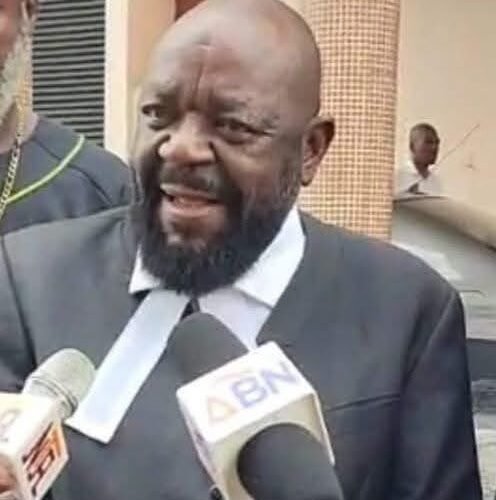
*Barrister Aloy Ejimakor is a US-trained, formerly US-based lawyer. He is an authority on International Law, as well as Constitutional and Civil Rights Law. He’s also an authority on the complex systems of Military Code of Justice, having been admitted to practice before the United States Court of Appeal for the Armed Forces.
He has vast experience across legal practice, among them privatization and commercialization of public enterprises. Currently, he is the Principal at Aloy Ejimakor Legal Services with offices in Abuja and Owerri and an affiliate in the United States. Among his many valued Clients is Mazi Nnamdi Kanu, the Leader of the Indigenous People of Biafra (IPOB), whom he has successfully represented as a Special Counsel since October 2017.
Ejimakor also currently leads Kanu’s Legal Team and handles many special IPOB-related Briefs.