









By Emmanuel Ogoigbe, Warri
Moving to reduce tension in oil-rich, multi-ethnic, pluralistic Warri, a prominent Delta State city with residents of sharply contrasting tendencies, a group, Centre For Peace, Environmental and Justice (CEPEJ), in collaboration with Warri Peace Community Support Initiative and Delta State Civil Society Forum, yesterday held a one-day capacity programme towards that end.
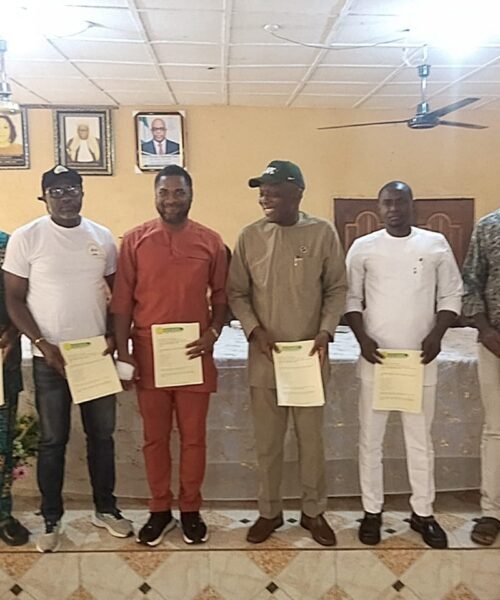
The programme, titled ‘One Day Capacity Programme for Warri Indigene and Residents Committee/Other Stakeholders on Conflict Management and Early Warning and Early Response – EWER In Warri Federal Constituency’, held at Peemos Hotel, Opposite Government Lodge, GRA.
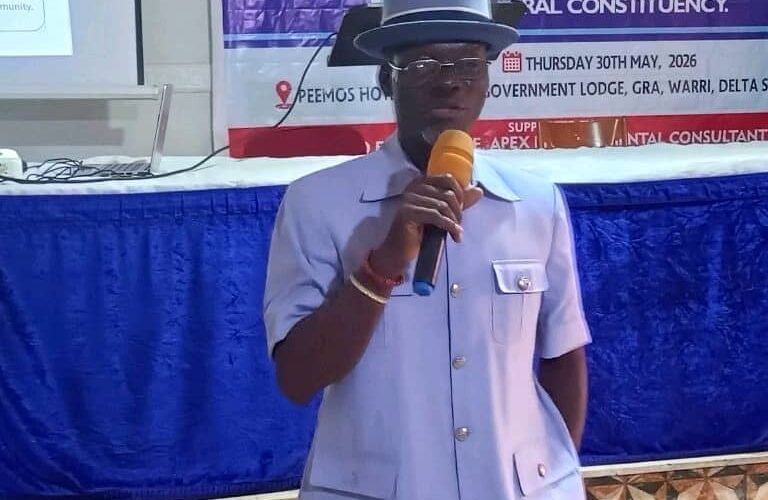
Addressing participants, National Co-ordinator and Chief Executive Officer of CEPEJ, High Chief Sheriff Mulade, said a committee to birth the programme was set up few months ago to educate the people on the need to reduce tension in Warri on the heels of the controversial delineation of Warri Federal Constituency by Independent National Electoral Commission (INEC) – matter that generated much bad blood among some of the ethnic nationalities and led to court cases.
According to Mulade, government alone cannot guarantee peaceful coexistence, declaring that everyone must join hands to maintain and sustain peace in Warri, the State and the nation at large.
His words: ”The peace we need cannot be provided by the government or by security agencies alone but by all.”
He propounded a theory for peace involving what he described as the three big capital “Cs” -communication, co-operation, and coexistence.
Mulade enjoined politicians during the forthcoming political campaigns to avoid hate speech, saying they should rather focus on the manifestos of their campaign and political parties’ ideology.
Earlier in her lecture titled ‘The Impact of Conflict on Economic – focus on the family’, delivered by Executive Director of Community Empowerment and Development Initiative (CEDI), Mrs. Martha Onose, she said conflict in any form does not bring about development to such area.
According to her, it (conflict) affects family, destroys assets, leads to loss of income, increases expenses, and causes displacement, among others.
Onose advocated early mediation through community leaders and educating the people especially, the youth, on the dangers of conflict in their various communities.
“Conflict is a profound economic shock that breaks down the family unit. The economic impacts are long-lasting, trapping generations in poverty. Targeted family-focused support is essential for recovery.
“Conflict does not choose sides when it comes to hunger. A peaceful Warri is a wealthy Warri. Let us protect our peace to protect our pocket,” she counseled.
Another topic, ‘Early Warning and Early Response System’, was discussed by Fater Kyegh, an EWER Analyst under EU project.
A question and answer session climaxed the event.
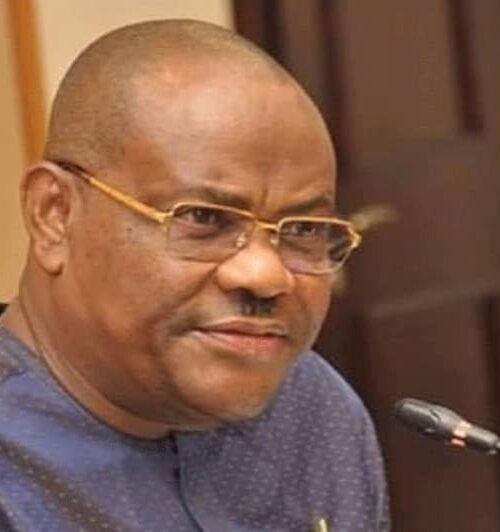
*PHOTO CAPTION: Mulade speaking during the event.