





(Also published in the Sunday New Telegraph, October 25, 2026)
TRIBUTE
By SHEDDY OZOENE
Death has a way of taking us back to where a relationship began. When news broke on Monday, October 19, of the death of Dr. Emmanuel Eweta Uduaghan, former governor of Delta State, my mind went back to 1998, when I first met him. Nigeria was preparing to return to democratic rule after years of military dictatorship, and a new generation of politicians was emerging to shape the country’s future.
Over the years, I came to see him not just as a politician who rose from the hospital ward to govern an oil-producing state, but as a quiet man who valued personal relationships and did not easily forget those he encountered along the way.
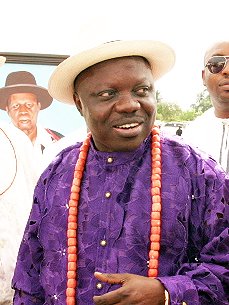
Our paths first crossed when I was editor of TheDiet, a national newspaper published by Chief James Ibori, who would later become governor of Delta State. I had accompanied Ibori to Warri to receive officials of the newly formed Peoples Democratic Party (PDP), who had come to commiserate with the state over the tragic petroleum fire disaster at Jesse, in Ethiope West Local Government Area. The disaster claimed more than 1,000 lives and left a deep scar on the community and the state.
The PDP delegation, which included Mallam Adamu Ciroma, Okwesilieze Nwodo, Buba Galadima and Solomon Lar, came to sympathise with the people of Delta State at a difficult moment. The visit brought together people who would later play significant roles in the state’s political evolution. More importantly, it introduced the new party formally to the state and kick-started the race for the political soul of Delta State.
The event was a turning point for James Ibori. The turnout and handling of the event by his loyalists announced him as the state’s emerging leader.
I had initially intended to return to my job in Lagos, having agreed with Ibori only to help organise media coverage of the visit. But Uduaghan played a role in persuading me to stay. He appreciated the way I mobilised media support and managed publicity for the event, just as I admired his personal commitment to ensuring its overall success. That encounter laid the foundation for a personal relationship and convinced me to remain in Warri to participate in the governorship campaign that led to Ibori’s victory in 1999, and for the eight years thereafter.
Uduaghan was among the young men and women rallying support for Ibori, his cousin. Others included the likes of Ighoyota Amori, Ifeanyi Okowa, Ray Inije, Peter Nwaoboshi, Fred Brume, Solomon Ogba, Adaora Giwa-Amu, Patrick Osakwe, James Manager, Faith Majemite, Nkem Okwuofu, Friday Ani, Young Daniel Igbrude, Grace Oddiri, Terry Noah and others. They belonged to a generation that saw the return to civilian rule as an opportunity to change the direction of politics and governance in Delta State.
More profoundly, Uduaghan struck me as one of those quiet workaholics who preferred to make things happen without necessarily seeking the limelight.
So, following the 1999 election, I wasn’t surprised that Uduaghan was appointed Commissioner for Health. He later became Secretary to the State Government in 2003 before succeeding Ibori as governor in 2007. His journey from medicine through public administration to the highest political office in Delta State gave him experience of government from different perspectives. Yet, as his political fortunes grew, I continued to see the man behind the office. For me, the more enduring memory of the man we chose to call Asamaigor, is that he did not allow political advancement to erase the relationships he had built before attaining power.
My relationship with Uduaghan was one such connection. As I prepared to leave the Delta State Government after serving as Governor Ibori’s media adviser and spokesman for eight years, Uduaghan offered to retain me in the same role. It was a gesture that spoke volumes about the personal bond we had built before he became governor. At a time when some people in Delta State regarded me as a ‘foreigner’, Uduaghan had been a steady guide, helping me navigate the state’s political terrain that usually crossed sensitive ethnic boundaries as I engaged the public on behalf of the government.
Governing Delta was no easy task. Its oil wealth came with enormous expectations, competing interests and the continuing challenge of ensuring that ordinary citizens benefited from the state’s resources. He performed well, in my view, and the fact that he continued in the trajectory that Ibori had laid out, was commendable.
Our journey, however, was not without its twists. Our relationship suffered a strain towards the end of his tenure, when the question of his successor became a major political issue ahead of the 2015 governorship election. The indication had emerged that he would deviate from what was generally perceived to be the political family’s agreed succession plan.
In one of my conversations with the then PDP National Chairman, Alhaji Ahmed Adamu Mu’azu, in 2014, I learnt more about Uduaghan’s preference for Anthony Obuh, from Agbor, as his successor. I also gathered that he was putting considerable pressure on the party’s national leadership to influence the process that would produce Obuh as the next governor of Delta State.
Mu’azu, governor of Bauchi State from 1999 to 2007, was a close friend of Ibori among the class of 1999 governors. He once spent 3 days in the state commissioning Ibori’s projects, something that only President Olusegun Obasanjo and Governor Lucky Igbinedion had also done. He was in no doubt, therefore, that Ibori preferred Ifeanyi Okowa as Uduaghan’s successor, and he chose to take his bearing on the political developments in Delta, from his friend. The contest was therefore not merely about choosing a successor; it involved competing interests between two influential political figures who were also close relatives.
Later that year, during my visit to Ibori in the UK, I came away convinced that his preference for Okowa remained unchanged. Although he was in regular telephone contact with Uduaghan, I figured out that their conversations largely centred on family matters, not the political issues that defined the period.
When I returned to Abuja, I made the decision to discuss the issue with Uduaghan. I hoped to help bridge the divide between two men who were not only political allies but also close relatives, and who had both positively influenced my life.
Uduaghan had listened to me but gave no assurance that he would change his position. And he never did until circumstances compelled him to. He probably thought I had crossed the red line, and from that point, I noticed a cooling in our relationship. But I have never regretted that conversation. I believed then, as I do now, that speaking honestly was worthwhile if it could help prevent political disagreements from damaging a longstanding personal bond between two men to whom I owed considerable personal regard.
Although our relationship became less warm after that episode, mutual respect survived. That is why Uduaghan’s death means more to me than the passing of another former governor. It is the departure of a man whose path crossed mine at a defining moment in my life’s journey, and whose political journey I followed with admiration.
His record in office, like that of every public officeholder, will attract different assessments. A personal tribute should not require anyone to suspend judgement on a public official’s performance. Suffice it to say, however, that I considered his performance in office impressive.
Although his political light dimmed after he left office, particularly following his unsuccessful bid to represent Delta South in the Senate, he remained one of the most consequential political figures in the state. Indeed, his government’s policy of diversifying the state’s economy beyond oil ranks among the most audacious economic initiatives undertaken by any administration in the Niger Delta.
His wife, Roli, his children and other family members have lost a husband, father and loved one. The people of Delta State have lost a selfless leader whose years in office form part of their political and developmental history. We called him Asamaigor Olori Edema, the courageous, visionary, principled man. Rest in peace, Dr. Emmanuel Eweta Uduaghan. Your journey has ended, but the memories remain.
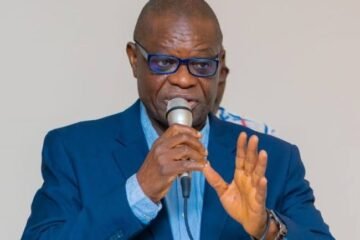
Sheddy Ozoene, Editor-In-Chief of People&Politics is the Vice President, Nigerian Guild of Editors.