










*Elephants, Warthogs, Pangolins, Crocodiles, Snakes, Others Are Raw Materials
*Exploits Sambisa Forest’s Natural Resources To Raise Funds In Hard Currency, Naira
*Controls A Forced Local Middleman System At Point Of Death
*The Global Link
The Boko Haram terrorist insurgency has created a lucrative shadow economy in northeastern Nigeria in which wildlife is increasingly being exploited to generate money and supplies for terrorists, TruthNigeria reports.
TruthNigeria.com is an independent news and field-reporting organization focused on violence, security alerts, and human rights violations in Nigeria, with an emphasis on the persecution of Christian communities in the country’s Middle Belt and northern regions. Its headquarters is in the United States (US) and it has a battery of well-equipped reporters on ground in Nigeria.
Survivors and local sources interviewed by TruthNigeria described a system in which elephants, warthogs, pangolins, crocodiles, snakes and other wildlife are hunted in and around Sambisa Forest, with valuable animal parts passed through local traders and middlemen toward major Nigerian markets and, in some cases, international buyers.
The trade is occurring amid a wider global illegal wildlife economy estimated by the World Economic Forum (WEF) to be worth between $7 billion and $23 billion annually, making it one of the world’s largest criminal enterprises.
An investigation by HumAngle, an online news outlet which reports conflict, humanitarian crises, security, development, and accountability stories across Africa, headlined ‘From Elephants to Warthogs: The Shadow Wildlife Trade Financing Boko Haram in Nigeria’, independently documented the growing trade in warthog tusks in Borno State and reported allegations of Boko Haram involvement.
From Elephants To Warthogs
The Islamic insurgency has dramatically altered wildlife populations in the notorious Sambisa and surrounding forests, findings show.
According to survivors interviewed by TruthNigeria, elephants that once roamed the forest have been killed or displaced toward Cameroon. As elephants became more difficult to find, terrorists and hunters increasingly turned to warthogs.
Warthog tusks are made of dentin, similar to elephant ivory, and can enter similar trafficking channels.
HumAngle reported that mature warthogs could sell locally for between ₦200,000 (about $160) and ₦500,000 (about $385) while individual tusks could fetch about ₦30,000 (about $23).
It is then left to the imagination the total financial inflow when massive quantities of these items are secured over a period of time.
TruthNigeria, which spoke to Rhoda Joseph, a survivor who spent two years in Sambisa Forest after Boko Haram fighters killed her husband and took her captive, reports her as saying that terrorists hunted wildlife as part of their activities in the forest.
Another survivor, 17-year-old Sarah Emmanuel from Gwoza, told TruthNigeria that terrorists hunted elephants, warthogs, crocodiles, snakes, squirrels and other animals, working with local hunters and dealers who transported the products to markets.
A female survivor from near Konduga, Amina Usman, who escaped a Sambisa-linked camp, told TruthNigeria: “The fighters sent out hunting parties, especially at night. They removed the tusks in the bush and forced victims in captivity to carry the meat. Boko Haram terrorists collect the tusks for ‘business’—to buy guns and supplies from outside.”
She said civilians in communities such as Kawuri could be forced to act as middlemen and sell wildlife products in markets in Maiduguri, the bustling capital of Borno State.
Saratu Simon, a displaced Gwoza resident now living in an Internally Displaced Persons (IDP) camp in Nasarawa State, said: “Elephants that once roamed the forest at night are mostly gone—killed or driven to Cameroon. Now the terrorists dominate warthog hunting. Refusal means death. The tusks go to big buyers in Kano State and Lagos, then overseas.”
She also reported seeing pangolin scales being collected from deeper forest areas.
From Forest To International Markets
Dr. Ali Markus, who is familiar with the illegal wildlife trade, told TruthNigeria that conflict zones such as Sambisa provide ideal conditions for wildlife trafficking because government control is weak and armed groups can control access to forests.
He said local hunters provide knowledge of the terrain and animals to Boko Haram under threat. And once the wild animal is killed, families of Boko Haram hostages may be compelled to transport products to markets.
Nigeria has already emerged as a major international trafficking hub for pangolin scales.
A study published in Biological Conservation found that seizures linked to Nigeria between 2010 and 2021 involved more than 190 tonnes of pangolin derivatives, overwhelmingly scales, representing an estimated minimum of about 799,000 pangolins. Much of the trade was destined for Asian markets.
Nigerian authorities continue to make major seizures. In April 2025, officials seized 3.765 tonnes of pangolin scales in Lagos and arrested five suspects.
The existence of this established criminal infrastructure provides potential channels through which wildlife products from conflict-affected northeastern Nigeria can reach wider markets.
Wildlife And Human Suffering
The consequences are both environmental and human.
The United Nations Office on Drugs and Crime (UNODC) has warned that wildlife trafficking can reduce threatened species and disrupt entire ecosystems by destroying relationships between species and undermining ecological functions.
In Borno, survivors told TruthNigeria that communities already devastated by terrorism are being placed under additional pressure.
Farmers have lost access to land, hunters can be forced into criminal activity and civilians risk retaliation if they refuse terrorist demands.
A former hunter and vigilante, Nuhu Adamu, told TruthNigeria: ““They control what we hunt. Warthog meat is haram(forbidden) for them but sold anyway. The real profit is in tusks, horns, bones, and scales. We’ve seen pangolins and tortoise shells in their caches. Hunters who resist disappear.”
For northeastern Nigeria, wildlife trafficking is therefore more than a conservation problem.
It is potentially another component of the terrorist-financing and organized-crime economy.
Boko Haram Is Not Alone
The use of wildlife to support armed groups has been documented elsewhere in Africa.
One of the strongest examples is the Lord’s Resistance Army (LRA), which operated across Uganda, South Sudan, the Democratic Republic of Congo (DRC) and the Central African Republic (CAR).
The US Treasury has sanctioned individuals for facilitating the LRA’s illicit trade in ivory, weapons and money. Investigations have also documented allegations that ivory obtained from elephants in Central Africa was exchanged for weapons, ammunition, food and other supplies.
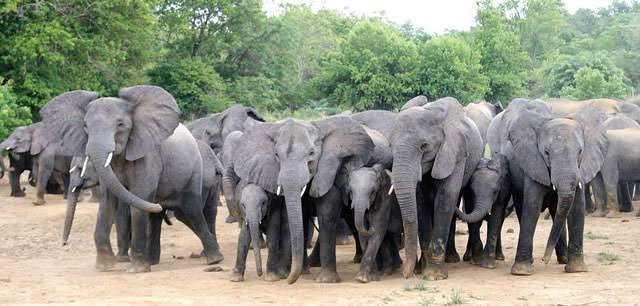
*PHOTO CAPTION: Elephant tusks are in demand by the terrorists.
*This piece was culled from TruthNigeria edition of 11 September, 2026, with few editorial tweaks such as headline change, insertion of riders, picture and picture caption change and few others which do not in any way affect the flesh of the write-up.