


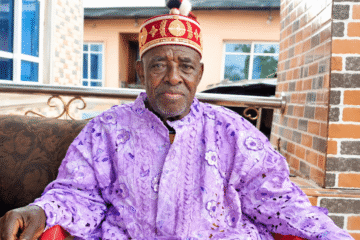








The last has not been heard of the alleged drug trafficking matter involving Nigerian citizen Bola Tinubu in the United States (US) in the early 1990s as the Federal Bureau of Investigation (FBI) has filed a motion seeking declarations on why it withheld information about its investigative records relating to allegations of drug trafficking against Tinubu, who is now President.
FBI seeks to submit the declaration ex parte in camera, amid keen interest in Nigeria over how the case plays out.
An ex parte in camera declaration is a written statement submitted not in public, but solely to a judge by a party in a legal case.
In an application dated 20 August, the FBI told the US District Court in Columbia that it cannot publicly explain all the reasons it is withholding certain records, hence the need for such secret declaration.
A copy of the application was published on X by Von Batten-Montague-York, a Washington-based lobbying firm recently hired by former Vice-President and presidential candidate of opposition African Democratic Congress (ADC) for the 2027 elections, Atiku Abubakar, known simply as Atiku.
Recall that in 2022 and 2023, American tech entrepreneur, activist, founder of the legal transparency website PlainSite and independent public disclosure campaigner, Aaron Greenspan, filed 12 Freedom of Information Act (FOIA) requests with six different US federal agencies seeking information from criminal investigations into a Chicago heroin ring that operated in the early 1990s.
Greenspan sought investigative records about four named individuals allegedly associated with the drug ring, including Tinubu, Lee Andrew Edwards, Mueez Abegboyega Akande, and Abiodun Agbele.
Five of the US agencies responded, saying that they could neither confirm nor deny the existence of the requested records.
Dissatisfied with the responses, Greenspan approached the US Department of Justice (DOJ)’s Office of Information Policy (OIP).
In the latest on the matter, the FBI said it has invoked various FOIA exemptions against the requests for Tinubu’s records from 1992 to 1993.
The US law enforcement agency said if it acceded to the requests, it “would, among other things, disclose techniques and procedures for law enforcement investigations and/or could reasonably be expected to endanger the life or physical safety of any individual.”
The agency did not say who, what group of persons or in what part of the world such person(s) to be exposed to the alleged potential harm, reside.
Part of the FBI’s application read: “One of the requests at issue is the request assigned Request Number 1588244-000, which sought “[t]he entire FBI file for Bola Ahmed Tinubu, DOB 3/29/1952, President-Elect of Nigeria as of February 2023.
“Plaintiff submitted a second FOIA request to the FBI seeking “FBI 302 interviews with Bola Tinubu from FBI Case No. 245-IP-71386-UUUUUU during the timeframe 1992-1993.
“This was assigned Request Number 1593615-000. The FBI has invoked various Freedom of Information Act (FOIA) Exemptions, including 6, 7(C), 7(D), 7(E) and 7(F) regarding these requests, and determined the information withheld from Plaintiff in this case, if disclosed, would, among other things, disclose techniques and procedures for law enforcement investigations and/or could reasonably be expected to endanger the life or physical safety of any individual.
“The FBI has determined that it cannot provide on the public record the full basis for the application of Exemptions 7(E) and 7(F) to certain withholdings and that, therefore, an ex parte, under seal declaration is necessary.”
The FBI said if the court grants the permission to submit an ex parte in camera declaration, it would explain reasons for withholding certain information before 28 August (Friday next week).
The plaintiff in the case is Aaron Greenspan, the American founder of PlainSite.
Recently, the DOJ requested an additional 10-day extension to respond to a court order concerning the release of records related to allegations of drug trafficking against Tinubu.
However, Judge Beryl Howell, granted only four additional days, until August 21 (today).
Subsequently, Tinubu, through his legal team, joined the DOJ’s request seeking an additional 10-day extension to respond to a court order.
Howell reportedly declined Tinubu’s request.
At the time Greenspan approached the DOJ’s OIP, the latter affirmed the five agencies’ refusal to confirm or deny the existence of the requested records, according to the court documents.
On 12 June, 2023, Greenspan filed a lawsuit challenging the agencies’ Glomar response to his FOIA requests –a Glomar response being an official statement by a US government agency refusing to confirm or deny whether requested records exist.
The FBI, Drug Enforcement Administration (DEA), Internal Revenue Service (IRS), the Executive Office for United States Attorneys (EOUSA), and Department of State were initially named as defendants.
However, the CIA was later named as a defendant in the first amended complaint.
In April 2025, Judge Howell held that the responses issued by the FBI and DEA were “improper and must be lifted”.
The judge ruled that the FBI and DEA failed to provide information to “establish cognizable privacy interest exists in keeping secret the fact that Tinubu was a subject of criminal investigation.”
Howell held that the two agencies failed to provide evidence demonstrating the burden of sustaining their Glomar responses.