




By SHEDDY OZOENE
It is still an unfolding story. If you like, it is only the kick-off of a football match that could go the full 90 minutes, into extra time and perhaps even a penalty shootout. As we say in such contests, a winner must emerge between UEFA and a coalition of continental federations on one side, and FIFA President, Gianni Infantino on the other.
Fresh from the successful 2026 FIFA World Cup hosted by the United States, Canada and Mexico, FIFA has found itself in the middle of a major controversy over plans to restructure the commercial ownership of its biggest competitions.
Let me confess from the outset that I am a football lover, even if I do not pretend to understand all the politics behind the game. So when reports emerged that UEFA could boycott future FIFA competitions over the proposal, I paid close attention. This was no empty threat. UEFA represents 55 national football associations, including many of the world’s strongest football nations. According to the FIFA rankings, Europe has 10 of the world’s top 15 national teams. If UEFA were to walk away from FIFA competitions, it would shake world football to its foundations.
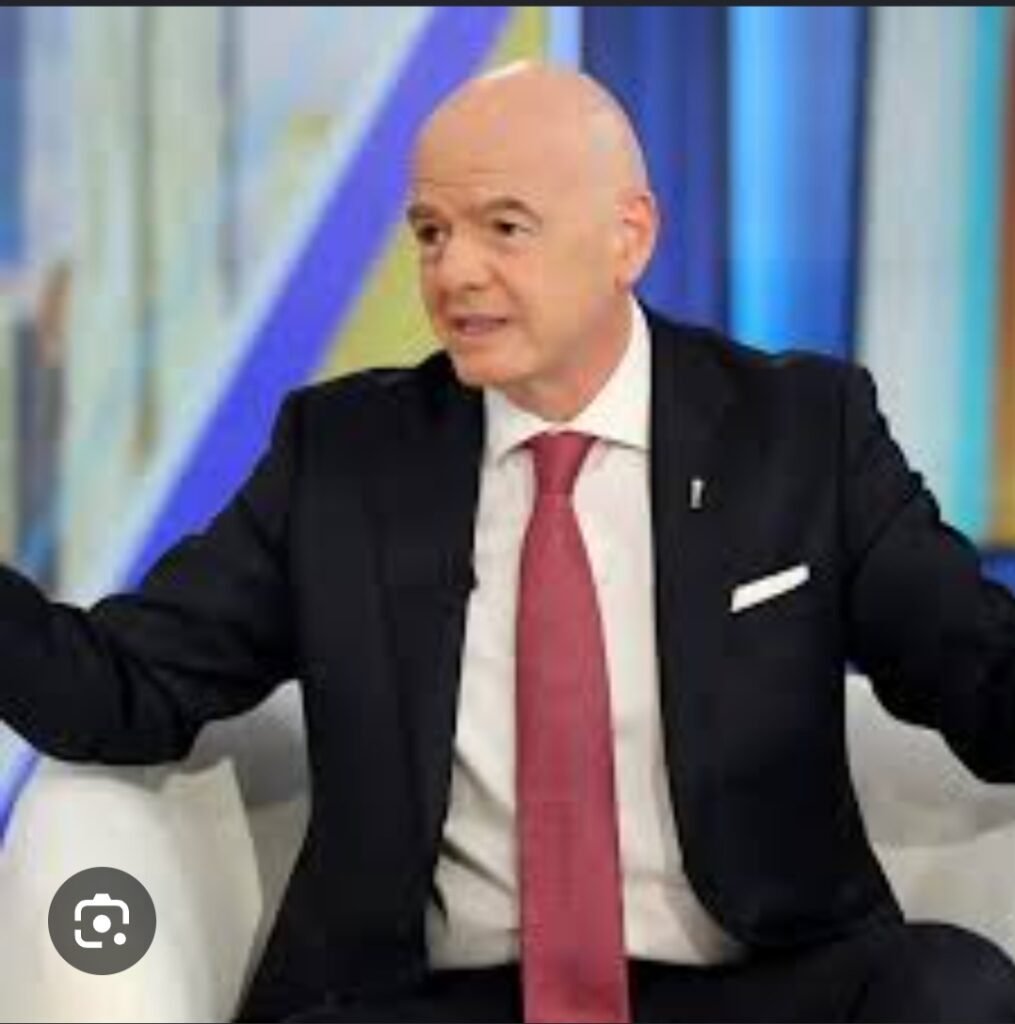
At the centre of the dispute is FIFA President Gianni Infantino’s belief that football is not making as much money as it should. He argues that bringing private investors into FIFA’s commercial operations could generate billions of dollars that would be invested in football development across the world. UEFA and several other continental bodies see things differently. They believe the FIFA World Cup is a global sporting treasure whose commercial rights should never become partly owned by outside investors, no matter how attractive the financial rewards may be.
Infantino was forced to beat a retreat by canceling the plans. He believed it was enough to get UEFA and the growing opposition to his leadership off his back. But the pressure has rather increased and it may be the beginning of the end of his eventful reign.
The proposal was to create a new commercial company called FIFA Forward Enterprise (FFE), valued at about $20 billion. The company would manage the commercial rights to the World Cup and other FIFA competitions. FIFA would retain control but sell up to 20 per cent of the company to private investors, raising an estimated $4.2 billion. Infantino insists he is not selling the World Cup itself. According to him, only a minority stake in the business that manages its commercial rights would be sold.The attraction is obvious. FIFA says the extra money would allow it to increase financial support to its 211 member associations, with funding potentially rising to as much as $40 million for each association.
For countries like Nigeria and across Africa, where football federations constantly struggle for funds, that is a tempting offer.
Before he withdrew the proposal, former Nigeria Football Federation President Amaju Pinnick, now one of Africa’s influential voices in FIFA, defended the proposal during an interview on ARISE News. He argued that Infantino’s reforms have already increased the money flowing to national football associations by more than three times and that even more funding could follow if the proposal is approved.
That raises an important question: at what cost?
There are legitimate concerns. Once private investors come in, will they simply wait for returns on their investment, or will they eventually demand a greater say in how competitions are organised, marketed and expanded? Critics fear that commercial interests could gradually begin to shape decisions that should be made purely for the good of the game.
Transparency is another issue. UEFA, CONCACAF and the Asian Football Confederation say FIFA developed the proposal without adequate consultation with its stakeholders. Still, none of this should come as a surprise. Since Infantino became FIFA President, almost every major reform has had one thing in common: generating more revenue.
The World Cup has already expanded from 32 to 48 teams, beginning with the 2026 tournament. That means more matches, more television rights, more sponsorships and more ticket sales. FIFA has also transformed the Club World Cup from a relatively small competition into a 32-team tournament with huge commercial potential.There are even discussions about expanding the 2030 World Cup to 64 teams to mark the tournament’s centenary. Although FIFA has dumped the proposal, the very fact that it was being considered shows how aggressively the organisation was searching for new sources of income.
Critics worry that the drive for ever-growing revenues could come at the expense of player welfare, already overcrowded football calendars and the long-term health of the sport. They also fear that once investors acquire a stake, there will be constant pressure to create even more matches and commercial opportunities simply to maximise profits. As manifested in the last world cup, the perception was strong that the bad officiating of some matches was to ensure a particular national team advanced to the final. The rationale, as was rumored, was to please sponsors by ensuring the event ends on a high note.
In truth, this is a battle between two competing visions of football. One side sees football as a global sporting heritage that should remain under the complete control of the football family. The other believes football has enormous untapped commercial value that can be unlocked to benefit everyone. But the sore point in all these, and the aspect that may cost Infantino the Presidency is the allegation of lack of transparency in the present administration that allegedly does not consult adequately. It is these allegations that continue to linger.
Despite all the past protests against the gradual commercialisation of global football competitions, big cash has always won. Most national football associations, including Nigeria’s NFF, may already be looking at the billions being promised and imagining what those funds could do for football back home. But the reality is that the present crisis will produce something more consequential. It will define the future of global soccer competitions with the potential to either make or mar the tenure of the present FIFA leadership headed by the President, Giani Infantino.