












By FESTUS ADEDAYO
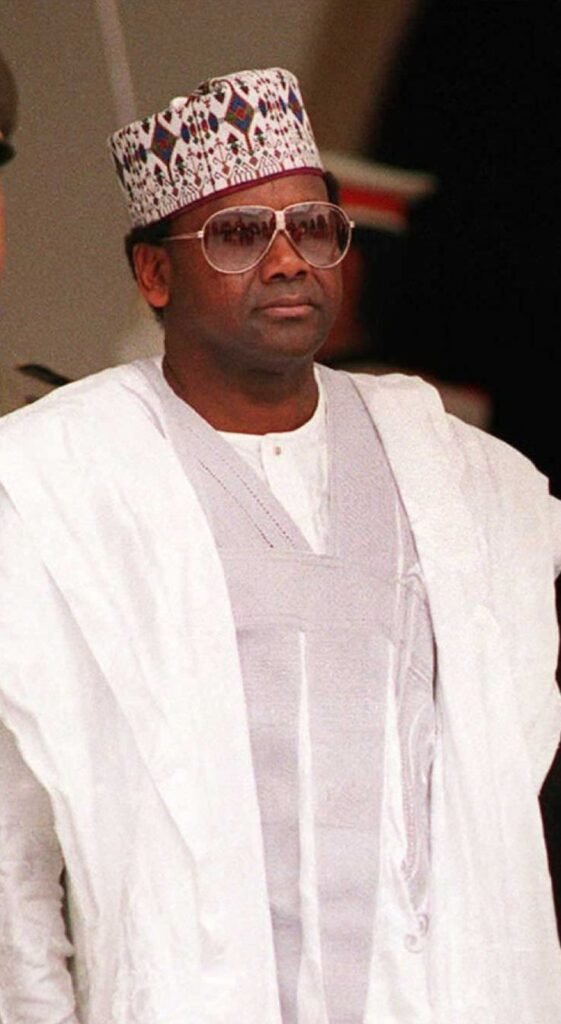
The Yoruba establish a direct causal relationship between tragic news and emotional grief. They observe that if the ears are not fed with rotten news, the mind will not be consumed by grief. Whatever his motive for publishing his book, DSS @40: My Journey Behind the Shield, retired Assistant Director of the Department of State Services (DSS) Dennis Amachree has reawakened an unpleasant yet momentous chapter in our national history. In doing so, he proves right the ancient adage that a twenty-year-old pounded yam can still burn one’s fingers as though it were fresh off the mortar. Through his book, Amachree resurrects the narrative surrounding the sudden, gladsome news of the demise of Nigeria’s former Commander-in-Chief and military dictator, General Sani Abacha.
A few weeks ago, I wrote about how the libido of men in power is a critical factor we must reckon with when analyzing the mechanics and texture of political authority. Even previously, I undertook a broader analysis of what I called thesexual history of the Nigerian presidency. It was a salacious narrative of the perceived sexual exploits of occupants of Dodan Barracks and Aso Rock, the two residences of Nigeria’s power. Amachree’s DSS @40: My Journey Behind the Shield underscores why this dimension of power cannot be brushed aside or taken for granted. In it, the author posits that on June 8, 1998, General Abacha did not die from a poisoned handshake from former Palestinian leader Yasser Arafat, but from cardiac arrest during an intimate encounter with a paramour at the Aso Rock Presidential Villa Guest House in Abuja.
On a social media platform, a commentator questioned whether Amachree was acting as an interloper, whether he had breached official secrecy rules, and why he chose to release this account at this particular time. My response focused on the formal process of declassifying official information and documents — the administrative procedure for removing security markings from secret government records to make them accessible to the public. Typically, declassification occurs through three main mechanisms: automatic declassification over time, systematic review by government agencies, and mandatory requests by interested members of the public.
Declassified records do not always tell the absolute truth, as governments often hold back unverified or raw intelligence from public disclosure to prevent panic. This appears to be what occurred in the Abacha episode. Generally, when official records reach a certain age — frequently 25 years — they are unsealed, provided they do not fall under specific exceptions whose release could compromise national security or trigger widespread public unrest. Sensitive national security files often remain classified indefinitely to protect state interests.
Because Abacha died 28 years ago, the public has spent decades navigating competing theories. One popular claim alleged that he ate apples laced with a lethal potion prepared by foreign intelligence agencies. His ADC, from whom authentic fact could have come, Major Hamza Al-Mustapha, propounded another theory, claiming Palestinian President Yasser Arafat was used to assassinate him. He further noted that Abacha began exhibiting unusual physical traits immediately after a handshake.
However, Al-Mustapha cannot be held to be a witness of truth if indeed Abacha died this way which, in African context, was a taboo. Again, he is the abore (Yoruba traditional male priest who assists in performing rituals, making offerings, and serving as a spiritual intermediary) of the Abacha shrine from whose mouth evil narratives are never expected to ooze out. By waiting for the required passage of time, Amachree fulfilled the standard criteria for declassifying information, granting him the administrative leeway to disclose what he knew about Abacha’s final hours.
However, whistle-blowers and former intelligence officers are sometimes deployed to divert public focus from pressing national issues or distract from an unfolding, unpleasant political reality. That could also possibly be Amachree’s assignment.
Expectedly, pushback and denials followed Amachree’s revelations. They are however a healthy development for public discourse. In an engaging opinion piece in the Vanguard newspaper, Tony Eluemunor challenged Amachree’s narrative using medical and situational evidence. Eluemunor argued that while Abacha suffered from diabetes and cirrhosis, he was severely ill on the night of June 8, despite the presence of two foreign paramours with him.
Of a truth, the whole country knew, prior to his expiration, that Abacha was ill. A few days before his passing, he appeared on national television looking gaunt, his lips unusually coloured and his goggles seemingly hiding critical information about his visage. The fact that he had two Filipinos with him on the night of his death, according to Eluemunor, presents a stark, troubling paradox: a ruler fiercely resisting Western influence and railing against America whom he called “global policemen of democracy,” while simultaneously permitting foreign liaisonsunhindered access into the innermost sexual and territorial borders of Nigeria’s power base.
Since Abacha’s era, numerous Nigerian public officials — governors, ministers, legislative leaders, and political aides —have compromised the dignity of public office through personal indulgences. Former Governor Adams Oshiomhole recently courted controversy regarding a widely circulated video involving a South African lifestyle influencer (euphemism for prostitutes) Ms. Leshaan Dagama, aboard a chartered aircraft. Such conduct appears to be a recurring pastime among powerful men.
Upon reading my previous piece, someone reminded me that all men, regardless of their situation in places of power, remain complicit in the borderless irritancy of the male member. Malawian feminist scholar and former government minister, Dr. Jessie Kabwila, noted this during a public address in June 2025. There, she stated candidly: “All men are weak before women.” Centuries prior, in his seminal History of Sexuality, philosopher Michel Foucault similarly challenged Western society’s understanding of sex, power, and discipline, demonstrating how carnal desires intersect with structures of institutional control.
What has largely kept the full truth of Abacha’s final moments shrouded from public scrutiny is religious sensitivity. Till date, no one knows what ailed and probably killed Umaru Yar’Adua and Muhammadu Buhari. I strongly advocate that Nigerian leaders ought to be exempt from religious boundaries from the moment of their ascension to office up until their death. Upon assumption of office, they should totally become the collective property of the Nigerian state. Consequently, the full, unvarnished facts surrounding their final days should belong strictly to the public record, free from religious taboos, hypocritical cover-ups, or selective official secrecy.