




THE HERO’S JOURNEY
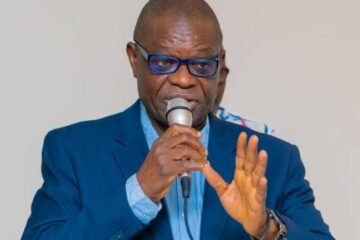
By ANAYO AGU
Every generation produces individuals who, through courage, conviction, commitment, service, sacrifice, and accomplishment, rise above ordinary expectations and become symbols of collective beliefs, values, and aspirations. History remembers such individuals not merely because they occupied positions of authority, but because they transformed challenges into opportunities and left their communities stronger than they found them. Such individuals are called heroes because they embody the ideals, morals, and evolving history, traditions, culture, hopes, and aspirations of their people.
In literature, mythology, and history, this transformation is often described as the hero’s journey: the timeless story of an individual who accepts a difficult challenge, confronts opposition, overcomes obstacles, proves his worth through action, and ultimately returns bearing gifts that benefit his people.
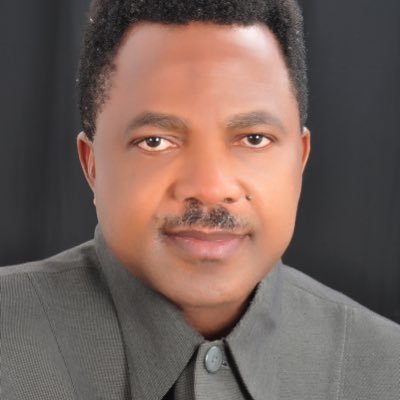
For many people across Enugu West Senatorial District, the political journey of Distinguished Senator Osita Ngwu increasingly resembles this archetypal path.
His story is not just about politics. It is a story of a burning desire to serve, of expectation and doubt, of resilience and performance, and of the growing conviction that political leadership is best measured not by age, pedigree, endorsement by godfathers, or longevity, but by tangible dividends of democracy, goodwill, accessibility, and grassroots support.
The Call to Leadership
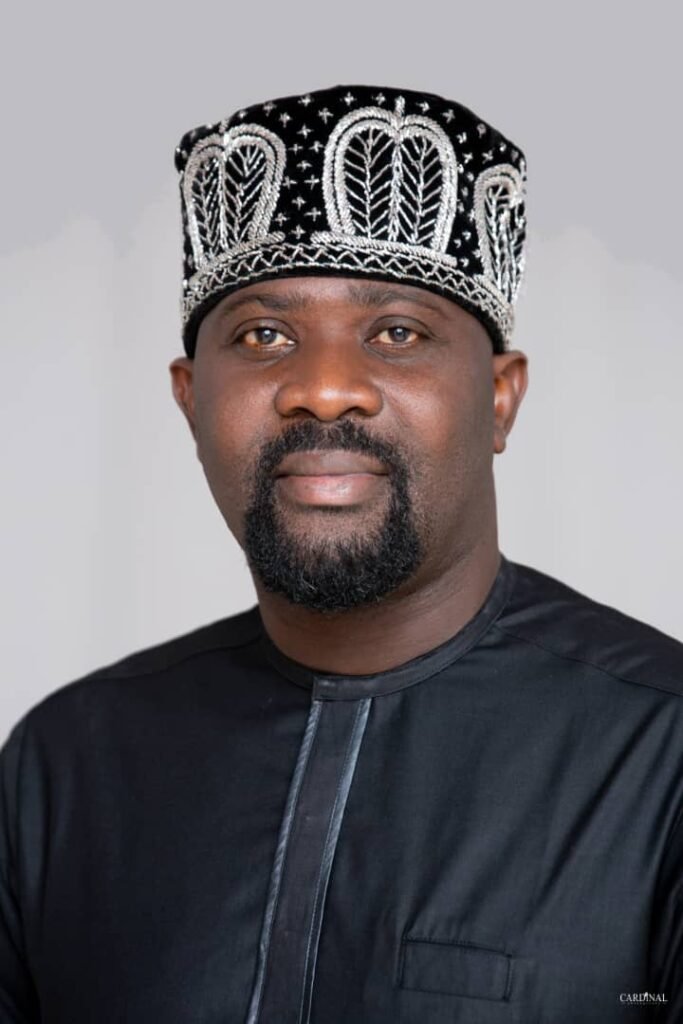
Every hero’s journey begins with a call. For Senator Osita Ngwu, that call emerged during the 2022–2023 political season when he presented himself to represent Enugu West Senatorial District in the Nigerian Senate. Prior to that, he had experienced and stoically endured a political setback in 2019, when he was reportedly asked to step down by those who constituted the elite consensus that shaped the PDP primaries for the House of Representatives.
As the campaign for the senatorial primaries reached a crescendo, many observers and stakeholders questioned whether he possessed the experience required for such an important office. Critics argued that he was too young. Others pointed to his limited exposure to public administration, internal party intrigues, and the brutal realities of elective politics.
Some believed the Senate was a destination reserved for older and more established political figures.
The skepticism was intense and, in some quarters, understandable given the experience of 2019. Yet history teaches that transformational leaders often emerge from outside conventional expectations. They are frequently underestimated precisely because they do not fit familiar templates or conform to the status quo.
Rather than retreat, Osita Ngwu accepted the challenge. He ran a race that was remarkable for its honesty of purpose, grassroots mobilization, youth and community participation, and strategic engagement across the entire breadth of Enugu West. Above all, his campaign was largely devoid of rancour, needless internal battles, or the violence that often characterizes such high-stakes contests. His eventual victory marked the beginning of a journey whose significance is becoming clearer with each passing year.
The Trial of Expectations
Winning an election is one thing. Leadership and the fulfilment of electoral promises are another. Many first-term legislators spend years learning the ropes, building networks across political divides, navigating parliamentary procedures, and struggling to establish relevance within the complex workings of the National Assembly. The true test for Senator Ngwu, however, began after the swearing-in ceremonies ended in June 2023.
Would he justify the confidence reposed in him? Would he disappoint those who had labelled him a neophyte, or would he prove them wrong? Would he become another occupant of a legislative seat in pursuit of personal interests, or would he distinguish himself through performance?
Three years after taking the oath of office, the answer has increasingly become evident. In a remarkably short period, Senator Ngwu has emerged as one of the most visible, vocal, and influential first-term senators in the country.
Through a combination of competence, emotional and social intelligence, diligence, strategic relationships, and legislative engagement, he has earned important leadership responsibilities within the Senate. Prominent among them are his emergence as Senate Minority Whip and his chairmanship of the Senate Committee on Air Force.
Other responsibilities include serving in significant committee leadership positions and participating in important legislative conversations affecting national development, security, local content, infrastructure, and public welfare. What many critics once viewed as a weakness, his relative youth, has instead become one of his strengths, bringing energy, accessibility, and contemporary perspective to public service.
The Builder of Minds
Every great hero leaves behind more than monuments. The most enduring heroes build people. This parallels a statement often attributed to the ancient Chinese philosopher Guan Zhong, who said, “If your plan is for one year, plant rice. If it is for ten years, plant trees. If your plan is for one hundred years, educate the people.” Senator Ngwu’s passion for human capital development, sports, and charitable causes long predates his entry into politics.
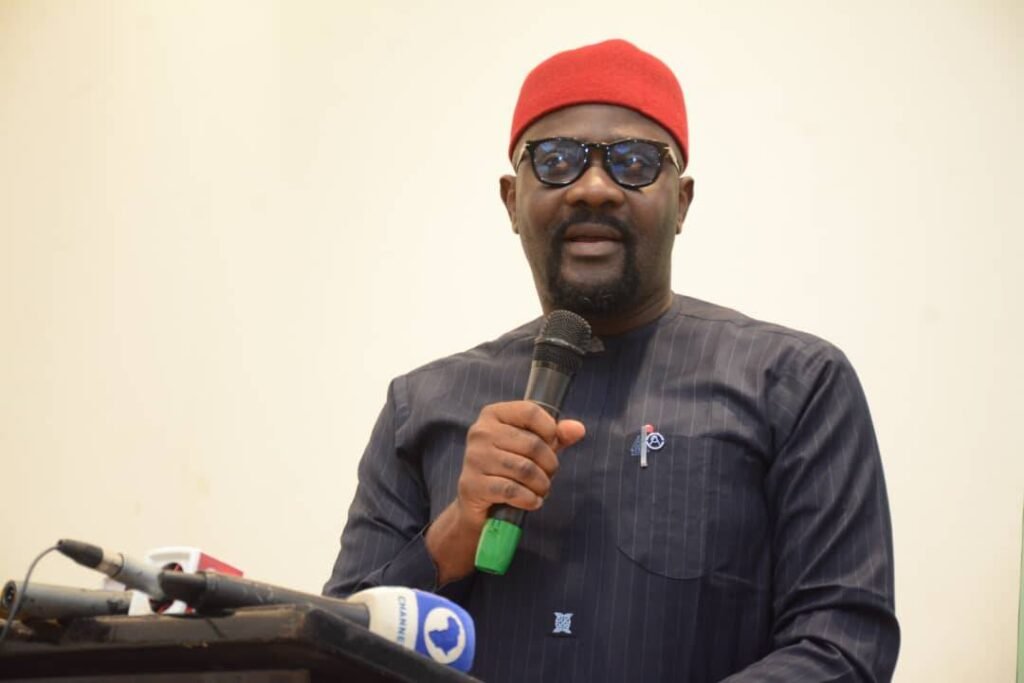
Many politicians prioritize projects that offer immediate visibility through photo opportunities and ribbon-cutting ceremonies rather than investments that take years to transform the lives of their constituents in a lasting way. Perhaps that is why no aspect of Senator Ngwu’s stewardship has generated greater public appreciation than his investment in education and human capital development.
Through the Enugu West Academy and related educational initiatives, thousands of young people have received opportunities that might otherwise have remained beyond their reach. The establishment of free JAMB learning centres across the senatorial district has helped prepare students for tertiary education, improve examination readiness, and expand access to opportunity.
More recently, the launch of a ₦250 million scholarship and bursary programme, complemented by a ₦100 million donation by the Senate President, Senator Godswill Akpabio, further demonstrated a commitment to educational advancement that extends beyond political symbolism. These interventions matter because education remains the most sustainable form of empowerment. It is one of the best ways to give a young person a future and a lifeline. Knowledge acquired by a young person can transform an entire family, community, and town for generations. A leader who invests in education, therefore, is investing in generational change and transformation. Not merely in his political future.
The Structure of Opportunity
The responsibilities of representation extend beyond lawmaking. Citizens increasingly expect their elected representatives to facilitate opportunities, attract development, and create pathways to economic advancement. Across Enugu West, Senator Ngwu’s interventions in youth empowerment, entrepreneurship support, skills acquisition, employment facilitation, and capacity development have earned widespread recognition and applause. At about midnight one day, I stumbled upon social media videos showing celebrations and thanksgiving late into the night in communities across Enugu West by beneficiaries of minibuses donated by Senator Ngwu. These were people who had previously felt disconnected from government but who now see public representation producing tangible benefits in their lives. The beauty of it all is that no constituency is excluded. These efforts reflect an understanding that political leadership must focus not only on legislative duties but also on human development.
The Presence of Development
Political representation ultimately becomes meaningful when citizens can see, touch, and experience the results, and when they enjoy reasonable access to their representative.
Throughout the senatorial district, constituency projects have provided visible evidence of representation in action. Roads, solar-powered street lights, boreholes, market infrastructure, educational facilities, foreign training sponsorships, and other developmental projects have improved community life and strengthened public confidence. These projects are important not merely because they exist, but because they demonstrate responsiveness to local needs. Effective representation is ultimately measured by whether communities feel seen, heard, served, and truly valued.
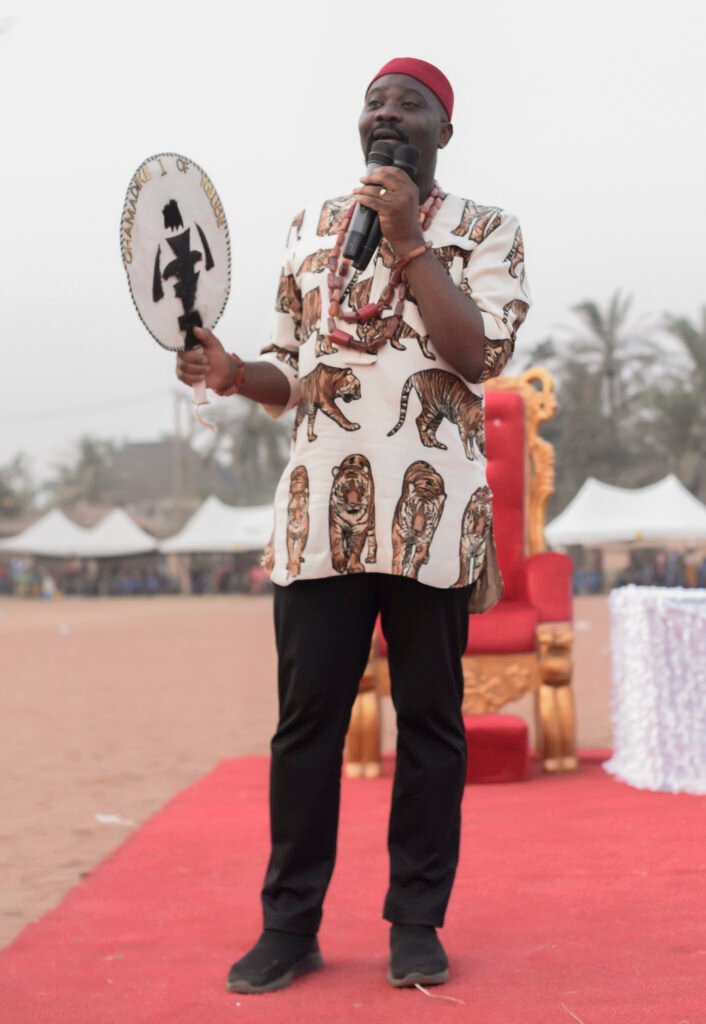
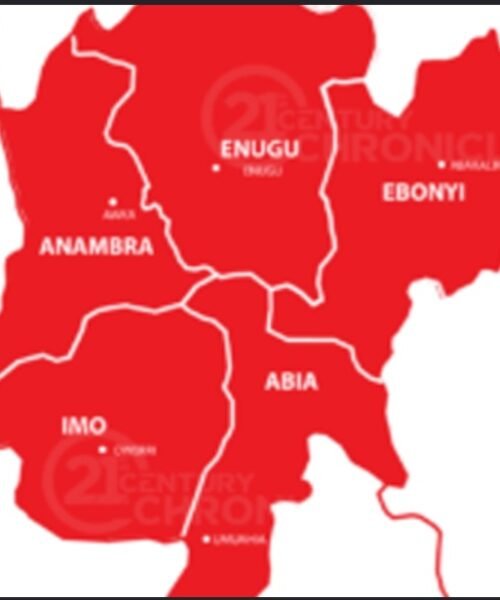
Across the five local government areas of Enugu West—Aninri, Awgu, Ezeagu, Oji River, and Udi, many citizens increasingly believe they are receiving that service.
From Ngwo Hero to Enugu West Hero
Perhaps the most fascinating dimension of Senator Ngwu’s political evolution is that his popularity has gradually transcended both his community of origin, his chieftaincy title, and the cultural zone that nurtured his political ambition—Agbaja Land.
Historically, Ngwo and Agbaja Land have produced some of the most influential political figures in the history of old Anambra State and present-day Enugu State. Among them were Dr. Sam Ihejirika Orji, Prof. Godwin Anibeze Odenigwe, and Chief Christian Chukwuma Onoh, who occupies a unique place in public memory and in the history of Enugu State.
For many people, C.C. Onoh represented altruism, courage, commitment, advocacy, and resistance against injustice, inequity, and political exclusion. His leadership of the Wawa Cause contributed significantly to the long struggle that eventually culminated in the creation of Enugu State. Following his passing, and the shocking earlier death of the erudite Dr. Sam Orji, many observers believed Ngwo had lost a significant measure of its political visibility, rallying force, and influence.
The emergence of Senator Osita Ngwu has therefore been interpreted by many as the restoration of that historic voice. Yet his appeal has expanded beyond Ngwo and Agbaja Land. Increasingly, he is being viewed not merely as an Ngwo or Agbaja champion, but as a representative of the broader aspirations of Enugu West in particular and Enugu State in general. That transition is important. Heroes become truly consequential when they cease to belong exclusively to their place of origin and become symbols of a larger collective identity and shared destiny.
The Question of 2027
As preparations for the 2027 elections gradually intensify, conversations about succession, continuity, and representation have understandably begun. In a democracy, every qualified citizen has the constitutional right to aspire to public office. Competition remains essential to democratic health. However, communities must also ask a practical and strategic question: when leadership is producing measurable results, doesn’t continuity offer greater value than disruption? Does political gambling at this juncture make sense?
This is not an argument against political ambition. Rather, it is an argument for strategic judgment and informed choice, especially for the people of Enugu West. The strongest case for Senator Osita Ngwu’s re-election is not sentiment, Ngwo’s population and political strength, Agbaja leadership endorsement, party affiliation, or emotional attachment.
It is performance.
The case rests on visible achievements, growing legislative influence, educational investment, infrastructure development, youth empowerment, accessibility, and the strategic advantage that comes from retaining an effective representative who has not only mastered the dynamics of the National Assembly but is also rapidly ascending within the hierarchy of national leadership.
The Return of the Hero
Every hero’s journey concludes with a return.
After overcoming political propaganda in 2023, proving his capability, and earning legitimacy through performance and service, the hero returns to the community not with promises, but with evidence. This is where the story of Senator Osita Ngwu presently stands. His performance in office has become the proof of his readiness, resilience, and genuine embodiment of the ideals, morals, values, and evolving political culture and aspirations of the people of Enugu West.
The approaching 2027 election represents the next chapter of the hero’s journey.
Ultimately, the decision belongs to the people of Enugu West. Yet if leadership is measured by service, tangible contributions, accessibility, inclusiveness, clarity of purpose, and the ability to convert public trust into public good, then Senator Osita Ngwu has presented a compelling case for continuity. Over the past three years, he has been a force for good in Enugu West.
The journey that began amid skepticism in 2023 has clearly become a story of outstanding performance, trust, and unflinching commitment to leadership by example. In the final analysis, that is how heroes earn the right to continue their journey. I wish him Godspeed.