









By Stephen Gbadamosi, Ibadan
An European Union (EU)-funded African Non-Governmental Organisation (NGO), TAF Africa, has assured Nigerians, particularly the about 35 million Persons With Disabilities (PWD) in the country, that measures have been taken, and more are under way, to ensure their inclusive participation in the 2027 general elections.
The NGO said in Ibadan, the Oyo State capital, that it had been engaging the Independent National Electoral Commission (INEC) and relevant security organisations to ensure that more PWDs participate in the coming elections in January and February 2027.
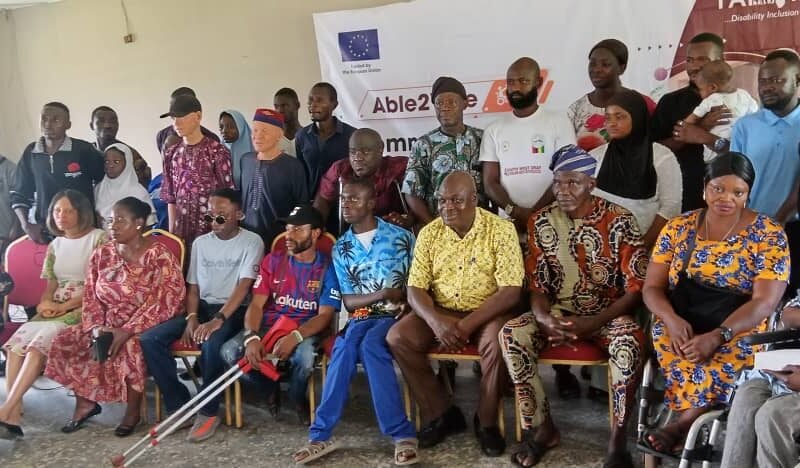
The development was revealed today at a Community Outreach for PWDs held by TAF Africa at the Cheshire Home Hall along Sango – Eleyele road, Ibadan.
Programme Manager of TAF Africa, Dr. Andrew Adaji, who explained what a wide range of participants might not have known before the outreach as well as efforts of the NGO to ensure that they exercised their franchise, come 2027, praised INEC for its cooperation.
Dr. Adaji said the task before TAF Africa was to champion the inclusion of PWDs in electing political leaders and participating in leadership roles.
“We have phrase for our activities; ‘Able2Vote’. We have been holding briefs with the INEC and security stakeholders to ensure PWDs participate in the 2027 elections and exercise their rights.
“We have got many positive results from INEC. And we tested some of these during the off-season elections in Osun and Ekiti; and they worked.
“For instance, it is now in the INEC Electoral Guideline to create a special lane for PWD, and they will have to cast their votes before the other voters. They have also provided this for elderly people and pregnant women. That is what the guidelines call priority voting. It’s there in INEC Guidelines.
“If you get to the polling unit and the electoral officers did not provide this, approach them and complain. They will create that special lane.
“One other thing is that some of you don’t know about what INEC calls Form EC 40 H: It is a form that must be filled for you as a PWD voter. This to help INEC to know the number of PWDs that voted in an election and be able to project and provide for you in other coming elections.
“However, most INEC ad-hoc officers that will come on the day of election might not know the existence of that form. In other cases, some are too lazy to fish out the form for you to fill after voting.
“INEC has also provided for assistive voting. Some people might not be able to see or use the braille guide; some people have cognitive disability, while some are people who had been healed of leprosy and had no thumb to cast ballots. In that case, you are allowed to come with a trusted relative to assist you to vote for your preferred candidate; but this doesn’t mean you would just pick anybody you met at the polling unit to help you.
“By the time we have a good turnout and records of PWD voters, even governments will begin to take you more seriously.
“Most people don’t even know that we have the National Disability Law that guarantees you most of these things. Some know just a bit of it. But there is more in it.
“Where there is no provision for accessibility of PWDs at the polling unit, don’t let anybody carry you; let them bring the polling box to where your wheelchair is,” he said.
Some of the participants shared their not-so-good and good experiences at previous voting they had participated in.
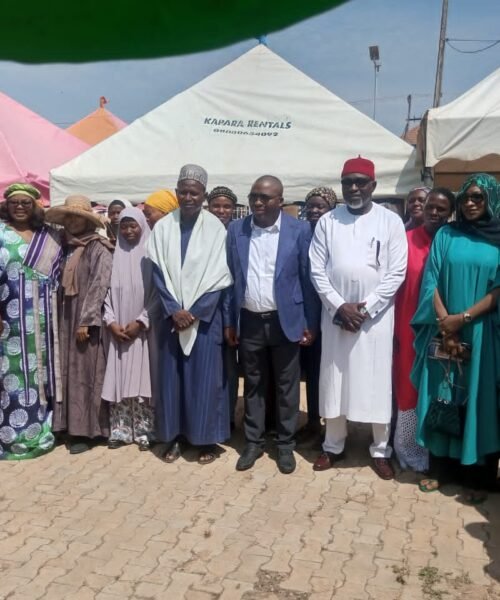
*PHOTO CAPTION: Programme Manager of TAF Africa, Dr. Adaji (2nd right) in a group photograph with PWDs at the event.