










By Sam Tyav, Makurdi
There appears to be no buy-in by more Christians in Benue State to the Federal Government’s (FG’s) pilot ranching policy, in which the North-Central state was picked as one among those where the initiative is to be tested.
The policy, according to FG, seeks to end the frequent herder-farmer clashes, which has cost several lives and led to destruction of items worth billions of Naira over the years.
Just days ago, Christian Association of Nigeria (CAN) in the state took a position, totally rejecting the policy on the grounds that most herders,from numerous experiences, were not interested in seeking pasture for their flocks, but territorial and religious annihilation of their Benue hosts.
The latest opposition to the policy came from the Nongo u Kristu u i Ser u sha Tar Church, or simply NKST Church, which has, like CAN, equally vehemently rejected the initiative, pointing out that the herders the FG intends to bring comfort to on Benue lands had allegedly accounted for the murder of 5987 members of the church and destroyed 753 of its parishes over the years.
To the church, government has no justification to bring the same group that allegedly committed these atrocities even as thousands of Benue indigenes remain in Internally Displaced Persons (IDP) camps, unable to access their ancestral lands now occupied by the herders, in the past 20 years.
A statement by General Secretary (GS) of the NKST Synod Executive Committee, Rev. (Dr.) T.A. Targba, noted that the church is vehemently opposed to pilot ranching which the FG thought was a solution to the persistent crises between herdsmen and farmers in the state.
The church, according to the GS, has noted FG’s desire to find lasting solution to the crises, but called on Abuja to settle the IDPs on the latter’s ancestral lands.
Dr. Targba stated: “Benue is not merely a geographical space available for government experimentation. The state is predominantly an agrarian society. Its land is the ancestral inheritance, economic foundation and livelihood of millions of people.
“For generations, Benue communities have cultivated their land, built homes, established churches, schools, hospitals, markets and other institutions upon it.
“Therefore, any policy involving the allocation, acquisition, conversion or reconfiguration of land must recognize and respect the ancestral rights, livelihoods, property rights and constitutional interests of the people who occupy and cultivate that land.
“The NKST Church therefore asks: Why should a state whose people have suffered displacement and destruction because of violent conflict now be selected as a laboratory for a policy involving land allocation for the same livestock economy that has been at the center of these conflicts? The answer cannot be merely administrative. The people of Benue deserve to be heard.
“NKST Church is not speaking from a distance. We speak as a Church whose members and institutions have been directly and severely affected by the prolonged violence across Benue and neighboring states.”
The church emphasized that a government that wants to establish a new agricultural order should first restore the people whose existing agricultural order had been destroyed by making the restoration and resettlement of the displaced communities the taproot of its policy.
Dr. Targba demanded for security for the displaced communities’ safe and voluntary return home, the rebuilding of their residences, infrastructure, restoration of schools, healthcare centres, markets, roads, water system and churches, among other things that FG should set about doing.
He insisted that there will be no ranching on the land of people who have been violently displaced even as he lamented that the church has invested enormously in the rural communities.
The NKST church leader called on the FG to take a comprehensive inventory of destroyed public- and faith-based institutions in the affected communities.
While maintaining that the church was not against any peaceful livestock farming, the GS called on the FG not only to cancel the pilot ranching programme but concentrate more on its primary constitutional duty of protection of ives and property.
The church leader wondered why government was interested in providing comfort amid unresolved displacements, but assured that the church would remain committed to peace, reconciliation, justice and peaceful coexistence among all Nigerians.
The GS assured that the church was ready to work closely with the federal and state governments, traditional institutions, other churches, civil society for peace.
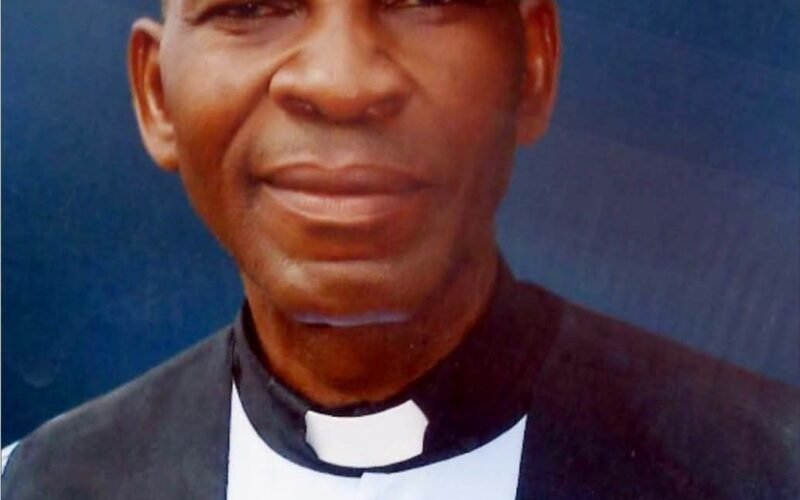
*PHOTO CAPTION: Rev. (Dr.) N.A. Adure, NKST president.