









By SHEDDY OZOENE
The 2025 Africa Cup of Nations final between Senegal and hosts Morocco was supposed to be a celebration of African football. Instead, it has become one of the most embarrassing episodes in the history of the competition. And the joke, unfortunately, is on the Confederation Of African Football, CAF.
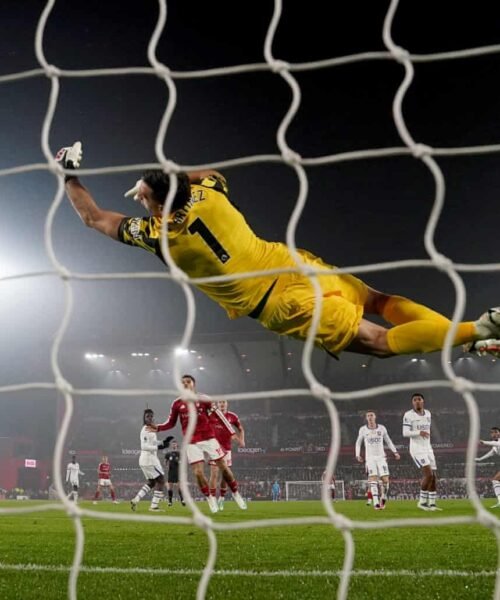
On January 18, in Rabat, Senegal and Morocco played out a tense final that appeared destined for penalties until a late controversy changed everything. With the game still goalless, Congolese referee Jean-Jacques Ndala awarded Morocco a penalty. The decision infuriated the Senegalese players, who believed they had been unfairly treated. In protest, they walked off the pitch.
For about 15 minutes, the final descended into confusion, with uncertainty over whether the game would continue. Eventually, Senegal’s players returned and the referee restarted the match. Morocco’s Brahim Diaz missed the penalty and the game proceeded into extra time. Pape Gueye subsequently scored the winning goal, giving Senegal a 1-0 victory and the African title.
That should have been the end of the story, but Morocco protested that Senegal had breached the competition regulations by leaving the pitch without the referee’s permission. On March 17, CAF’s Disciplinary Appeal Board overturned that result and declared Senegal to have forfeited the final. It awarded Morocco a 3-0 victory. Just like that, Senegal lost a championship it had won on the pitch, while Morocco became champions through the board room.
What followed was a legal battle initiated by Senegal that has now ended with the Court of Arbitration for Sport (CAS). In its unanimous decision of November 24, the Court ruled that the referee’s decision to restart the match fell within his authority. Having allowed both teams to return to the pitch and blown his whistle to resume play, the referee had effectively determined that the conditions for continuing the match had been met. The court also held that the relevant AFCON regulations on forfeiture applied to matches permanently abandoned by the referee, not one that had been restarted and played to a conclusion.
Consequently, the Court set aside CAF’s Appeal Board decision and reinstated the original verdict confirming Senegal’s 1-0 victory.
This is one decision that should thoroughly embarrass CAF. Nobody is suggesting that the conduct of the Senegalese players was acceptable. Walking off the pitch in protest against a referee’s decision is not an example of the discipline and sportsmanship expected of a national team. The players and their officials had a responsibility to respect the authority of the referee, even when they disagreed with his decisions. Their conduct deserved appropriate disciplinary attention. But there is a difference between punishing misconduct and overturning the result of a match that the referee allowed to continue to its conclusion.
The referee could have abandoned the match permanently if he considered the situation beyond control. But he did not. He waited for the players to return and restarted the game. Both teams played on, and Senegal won. Why, then, did CAF’s Appeal Board find it necessary to treat the match as though it had been abandoned?
Whatever the explanation, CAF owes African football more than a routine statement than what it has done by accepting the CAS verdict. This is because the damage goes beyond Senegal and Morocco. It affects the credibility of the AFCON itself. What message does this send to teams, players, referees, sponsors and millions of football supporters who invest their emotions and resources in the competition? Can a team celebrate winning a final today and remain confident that it will still be champion tomorrow?
If a governing body cannot interpret and apply its own regulations consistently, it becomes part of the problem rather than the institution expected to resolve it.
Morocco, disappointed by the decision of the Court of Arbitration for Sport, has announced its intention to pursue further legal options. It is entitled to pursue whatever legal remedies remain available to it. But threats of boycotting future AFCON competitions, if pursued, would only further damage African football. It will still end in futility because what they seek does not represent the rule of the game.
The bigger question, however, is what CAF has learnt from this episode. Its president, Patrice Motsepe, and the organisation’s leadership cannot simply wash their hands off the controversy that has been most embarrassing. There is also a lesson: the job of a governing body is not to satisfy the expectations of host nations. This is because all through the competition in Morocco, protests rang around that CAF was working to ensure victory for the host nation that is also bidding to host future tournaments. Rules are not meant to favour a party against another in a fair contest.
If Morocco had won the final on the pitch, nobody would have questioned its right to the trophy. If Senegal had been declared to have forfeited the match by the referee, that would have been an entirely different matter. But to allow a match to resume, watch it produce a winner and then overturn the result through administrative decision is a recipe for confusion.
Senegal have their trophy back. Morocco are unhappy. CAF has accepted the Court’s decision. But African football has been left with an embarrassing reputational problem.