







*Tehran Reportedly Charges $2m Per Trip Per Oil Vessel To Ply The Strait, Trump Moves To Stop It
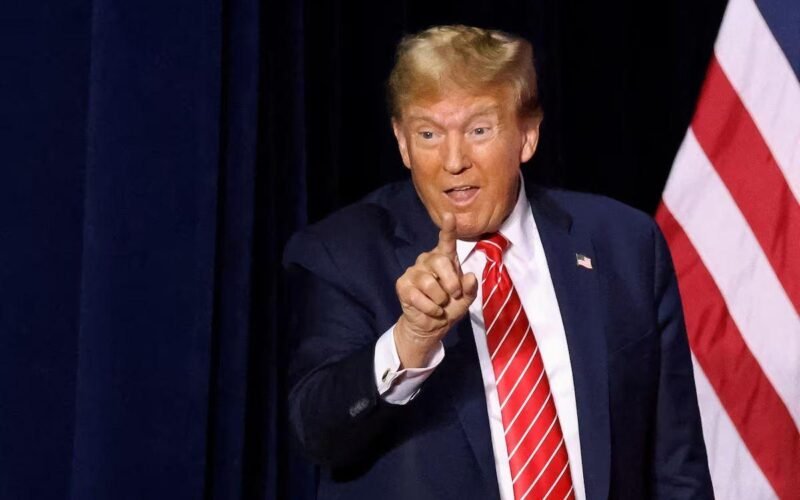
Petrol prices in Nigeria and globally may shoot up further if US President Donald Trump fails to reverse his order to the US military to begin blockading the vital Strait of Hormuz in an attempt to take control of the strategic waterway from Iran.
The Strait is the maritime highway plied by about a fifth of global oil shipping.
Trump’s order came in the wake of failed peace negotiations between both countries in Pakistan,at the weekend.
But, Iran’s Revolutionary Guard Corps (IRGC), said to be the real,effective governing force in the Islamic Republic presently, responded to Trump, declaring that if any warships approached the Strait to enforce a blockade – usually considered an act of war – it would be considered a breach of the current ceasefire and would be dealt with strongly. They insisted the Strait remained under Iranian control.
The price of a litre of petrol hovers around N1350-N1400 across several filling stations in Nigeria, worsening the country’s unresolved three-year-old cost of living crisis which has ground majority of the people deeper into the dust of poverty.
Observers fear that if the standoff between the US and Iran over the Strait boils over into a fresh shooting war -and lasts -, then the price of a litre of petrol in Nigeria may hit N2000 or even above.
The US President also threatened to bomb Iran’s water treatment facilities, power plants and bridges if Tehran did not agree to abandon its nuclear weapons programme, the key sticking point between the two sides.
In a Fox News interview on Sunday, Trump threatened to restart the bombing of Iran if a deal could not be agreed, and threatened to target the country’s water supply as well as its bridges and power generation.
Trump said: “The only thing left, really, is their water, which would be very devastating to hit. I would hate to do it, but it’s their water, their de-salinisation plans, their electric generating plants, which are very easy to hit.”
The President was asked if gas and oil prices might be lower by the US midterms in November, an indication that attacking Iran was not an economic mistake.
Prices “could be the same or maybe a little bit higher,” a non-committal Trump replied.
Trump’s surprise announcement of a blockade came after face-to-face peace negotiations between the US and Iran in Islamabad, the Pakistani capital, that lasted 21 hours collapsed on Sunday morning.
US Vice-president JD Vance, who is head of the US team, said Iran had refused to give up the possibility of developing nuclear weapons, while the Iranian delegates said Washington needed to do more to win their trust.
Risking another increase in oil prices, Trump said he had instructed the US Navy to begin “blockading any and all ships trying to enter, or leave, the strait of Hormuz,” and he accused Iran of extortion with its own scheme of charging tolls to tankers.
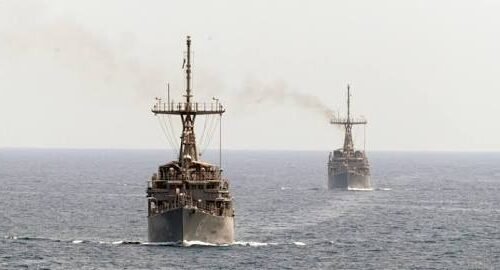
Two US destroyers crossed and recrossed the Strait without incident on Saturday, although Iranian media said they were threatened as they left. The US military said it was the start of a mine-clearance mission.
Trump said US warships would “seek and interdict every vessel” that had paid Iran since the start of the conflict and begin de-mining the central section of the strait, previously declared a “hazardous area” by Tehran, although it is unclear how many mines have been laid.
About 100 tankers have transited the Strait since the US and Israel started bombing Iran, paying up to $2m each time for passage.
Many were bound for China and India, carrying Iranian oil products, and chasing them down could complicate relations between the US and the importing nations.
The US and Iranian delegations left Pakistan soon after the talks ended. Vance said he spoke with Trump at least half a dozen times during the talks, held during a 14-day ceasefire announced by the US, Israel and Iran overnight on 7 and 8 April.
Speaker of the Iranian Parliament, Mohammad Bagher Ghalibaf, who led Tehran’s negotiators, said he and his colleagues had offered “constructive initiatives” while the US had been “unable to gain the trust of the Iranian delegation in this round of negotiations”.
Iran’s semi-official Tasnim news agency said “excessive” US demands had hindered reaching an agreement, and the Foreign Ministry said more time was needed.
“Naturally, from the beginning we should not have expected to reach an agreement in a single session,” the Ministry’s spokesperson Esmail Baghaei said, according to the state broadcaster IRIB.