







By Sylvia Kodilichukwu, Enugu
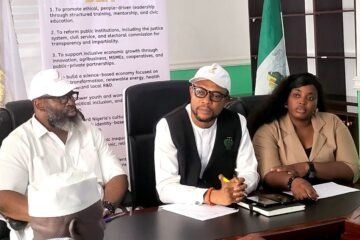
To properly arm journalists to report accurately and authoritatively, Media Rights Agenda (MRA) has organized a two-day Freedom of Information (FOI) training workshop for journalists and Civil Society Organizations’ (CSOs) representatives drawn from states in the South-East and South-South geopolitical zones.
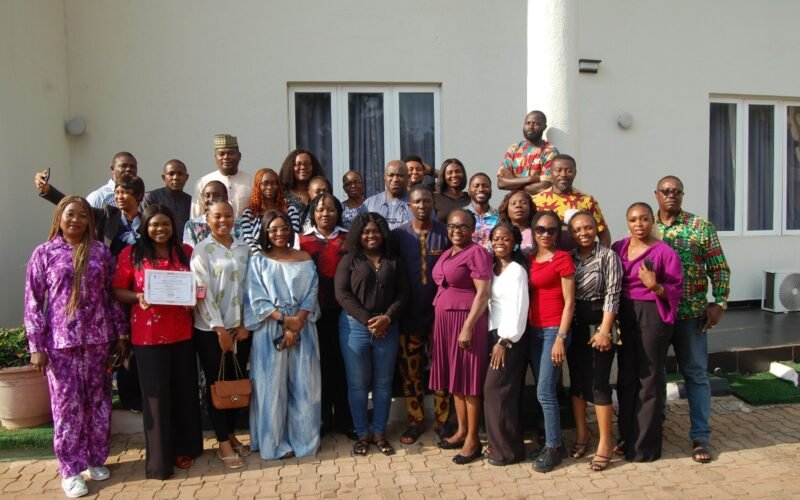
The workshop, which took place at Bridge Waters Hotel, Enugu, on 11-12 February, 2026 was supported by funding from a group, Luminate.
It aimed at strengthening the capacity of participants to effectively utilize the FOI Act as a tool for promoting transparency, demanding accountability, as well as enhancing investigative journalism and evidence-based advocacy in the two zones and at the federal level.
The workshop featured expert presentations, practical sessions, group discussions, and experience-sharing exercises on the use of the FOI Act as a tool for investigative reporting, civic engagement and monitoring democratic governance.
It also deliberated extensively on the state of implementation of the FOI Act since its enactment in the last 15 years; implementation challenges faced by the Law; and the opportunities it presents for journalism practice in the country as well as to other sectors of the society to advance their interests.
In a communique issued at the end of the training, read by Executive Director, MRA, Mr. Edetaen Ojo, the body stated that participants noted that access to information is a fundamental human right which all Nigerians should be able to exercise and enjoy as well as an essential pillar of transparency, accountability, and democratic governance.
They recognized the Freedom of Information Act, 2011 as an important legal framework through which ordinary citizens, journalists, and civil society actors should be able to exercise their right to information by demanding and obtaining information from public institutions and other entities to which the Act applies.
They expressed concern that nearly 15 years after its enactment, compliance with the FOI Act remains weak, inconsistent, and often obstructive as a deep-seated culture of secrecy remains prevalent within public institutions at Federal and State levels, including in States in the South-East and South-South, with many such institutions continuing to conceal information, delay responses to requests for information, or deny requests outright without any lawful or legitimate justification.
The participants also observed that although the Supreme Court had settled the issue of the applicability of the FOI Act to all tiers of government, many state governments, including in the South East and South South geo-political zones, continue to resist its implementation, including by relying on the untenable excuse of not having domesticated the Act as a pretext for denying requests for information.
They acknowledged the critical role of journalists and CSOs in promoting open governance and holding public institutions accountable, but conceded that many journalists and CSO actors lack the awareness as well as sufficient technical and legal knowledge required to effectively deploy the Act, with the result that they are unable to exercise the rights bestowed on them by the Act or enjoy its full benefits.
The participants noted that media ownership in Nigeria continues to exert significant negative influence over journalism practice, including in the usage of the FOI Act by constraining the ability of media professionals to operate and report freely and independently as a large number of media outlets are owned by governments, political actors, individuals with strong partisan affiliations, or business interests closely aligned with government authorities.
The situation, they stressed, creates a minefield for journalists who sometimes face subtle or overt pressure to shape their coverage in ways that protect the owner’s political, business or social interests.
The participating journalists and CSO representatives committed to making more active use of the FOI Act to seek and obtain information, records and official data, among others, for investigative reporting, public interest advocacy and other initiatives.
They agreed to engage in monitoring and documenting patterns of compliance and non-compliance by public institutions and make such findings publicly available through the issuance of periodic reports and journalistic coverage.
They, however, pledged to engage state and local governments in the different States in the zones through advocacy, dialogue, and public enlightenment campaigns to improve their awareness of their duties under the FOI Act as well as their compliance with those obligations and responsiveness to FOI requests.
They agreed to share resources among themselves, provide peer support to one another where needed, collaborate in enhancing the impact of their individual and joint efforts aimed at engendering transparency in government, and jointly challenge efforts by public institutions to obstruct the free flow of information.
The participants called for the provision of continuous training and mentorship for journalists and CSOs on the effective use of the FOI Act to improve their knowledge of the Law and build their capacity to utilize it for both journalistic activities and public interest advocacy.
Furthermore, they urged MRA and other CSOs to continue to provide technical support, legal and litigation assistance and other forms of support to journalists to enhance their skills and ensure more effective utilization of the FOI Act in media practice.
The participants called on Federal, State, and Local Governments to ensure the full implementation of the FOI Act and fulfilment of their duties and obligations under the Act, including the establishment of functional FOI desks, proactive disclosure of the various types of information which the Law requires public institutions to proactively publish, the diligent submission of their annual implementation reports and the training of their officials on the public’s right of access to information held by them and for the effective implementation of the Act.
They urged public institutions at all levels of government to adopt a culture of openness rather than secrecy and respond to FOI requests within the timelines stipulated in the Law as these would improve efficiency in the respective public institutions, bring about greater public trust in government, and significantly contribute to the delivery of democracy dividends to Nigerians.
The participants enjoined the Judiciary to expedite the hearing and determination of FOI-related cases as part of efforts to strengthen enforcement mechanisms provided in the Law as well as to ensure effective access to justice and accountability.
They urged media houses and CSOs to mainstream the use of the FOI Act into their routine work and advocacy strategies and strive to remain in the forefront of public enlightenment and sensitization.
The participants also called on journalists and civil society actors to strengthen their use of the FOI Act by strategically leveraging technology at every stage of the process, from making requests for information to publishing the information obtained, as technology can help them to draft and make better requests, track compliance more easily, analyze information speedily, collaborate more effectively, share findings widely and ultimately strengthen accountability.
They called on the media community in Nigeria to take urgent measures to promote greater transparency in media ownership; insulate professional journalists and editors from ownership influence and interference in editorial matters and processes; and strengthen regulatory safeguards for editorial independence in order to engender a free, independent and more professional media environment in the country.
In conclusion, participants expressed appreciation to the organizers and their partners for providing a platform to enable them refresh and sharpen their skills.
They reaffirmed their conviction that the FOI Act remains a potent tool for fighting corruption and ensuring that the resources of the South-East and South-South States are used for the benefit of the people.
They therefore pledged to improve their usage of the FOI Act in their work while also striving to ensure its effective implementation.
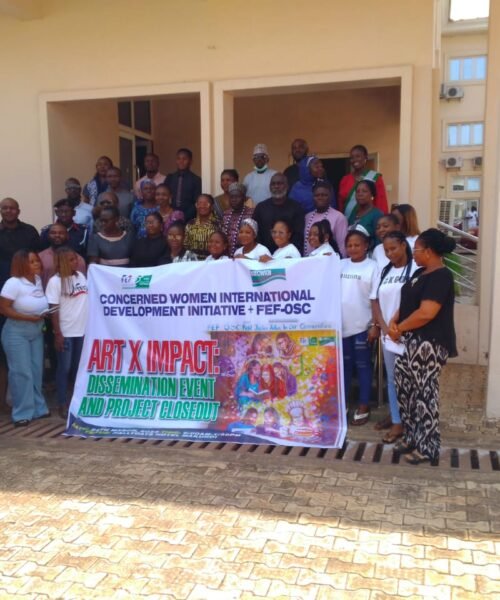
*PHOTO CAPTION: Some participants at the training in a group photograph.