












*Parties In Court Almost Always Come To Blows Arguing Matter
French justice is entering its final days before issuing a verdict in the case of Halba Diouf, a 23-year-old transgender sprinter who has accused the French Athletics Federation (FFA) of discrimination for barring her from competing in women’s events.
The highly complex proceedings, laden with sporting, legal, and social implications, will conclude with a ruling scheduled to be handed down on January 28.
Recently, the Paris criminal court heard more than two-and-a-half hours of arguments in a hearing shaped by shifting regulations and a lack of scientific consensus on the participation of transgender athletes in women’s sport.
The FFA requested an acquittal, denying any discriminatory treatment, but the direction of a ruling that could prove a watershed moment in France remains far from clear.
Diouf’s case is the first to bring the question of transgender athletes’ eligibility for women’s competitions before the French criminal courts.
The athlete, who is registered with a club in the Provence region, maintains that since February 2023 she has been excluded from regional and national competitions solely because of her gender identity, amid a tightening of rules driven by World Athletics, the international governing body.
Born male in Senegal, Diouf began her transition in 2021, and in 2022 French courts officially recognized her female identity in the civil registry.
Despite this, she says she was sidelined from competition, prompting her to initiate two parallel legal proceedings, one criminal and one administrative.
The hearing was marked by moments of high tension. Exchanges between judges and lawyers were at times sharp, to the point that one magistrate even invited the claimant’s attorney to leave the courtroom if he was dissatisfied with how the hearing was being conducted.
Outside the courtroom, Diouf appeared visibly shaken.
“It was extremely violent. I had to do a lot of explaining, and I have the feeling there is a profound lack of understanding about essential issues,” she said.
“I’m a bit disoriented. What I experienced today is exactly what happens in competitions: I come up against people who rely on stereotypes and prejudices,” added the athlete, who is also a Law student.
Her lawyer, Jean Boudot, described the hearing as “surreal” and denounced what he called the unnecessary harshness of the debate.
“Even in a high-level criminal court, there are social messages that still haven’t sunk in,” he said, convinced that this case is only the beginning of a debate that will continue.
For the federation, attorney Julien Bérenger sought an acquittal, arguing that the allegations lack a factual basis. “Inclusion cannot come at any cost,” he said, citing current World Athletics regulations, which require genetic testing for athletes seeking to compete in women’s categories, even though such tests are illegal in France.
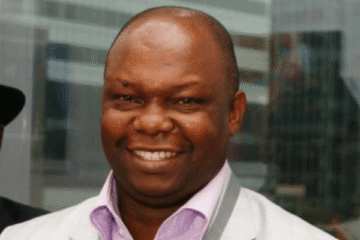
*PHOTO CAPTION: Diouf.