






By SHEDDY OZOENE
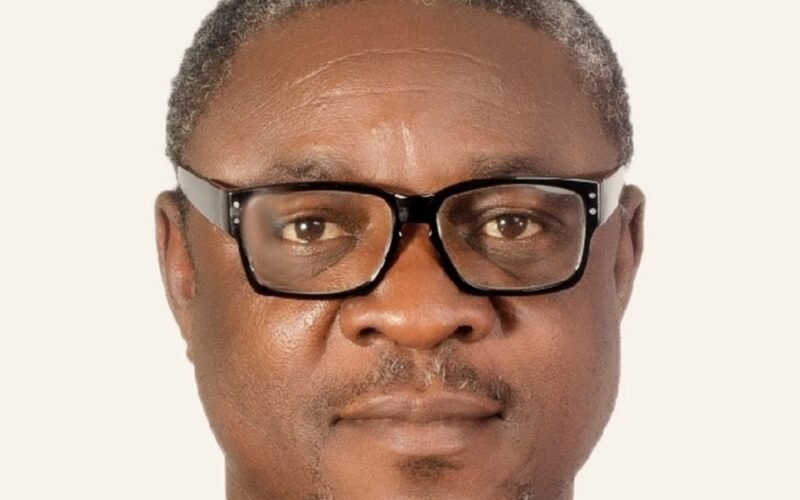
I first encountered the torrent of criticism and negative commentaries before I watched the interview itself. Social media was literally on fire, with many people condemning Daniel Bwala for what they described as a dismally poor performance on the Head-to-Head programme on Al Jazeera. That was when I went online to watch a recording.
In fact, I watched it twice, trying to understand what all the hullabaloo was about. What I saw—and the interpretation I drew from it—was quite different from the general reaction.
At first, I assumed the Al Jazeera invitation had been sent to the Presidency and that Bwala was nominated to represent the administration. But Bwala himself later clarified the matter: the invitation was addressed directly to him, and he accepted what, by any measure, was a suicidal assignment.That revelation changes the context entirely.
In the obvious danger of such an encounter with a relentless interviewer like Mehdi Hasan, Bwala, whose trajectory in the past few years has raised questions about his personal principles, must have seen a window of opportunity.
Daniel Bwala first rose to national prominence as a staunch member of the APC, projecting himself as a principled politician. When he defected to the PDP in the heat of the 2023 election campaign, he said it was in protest against Bola Tinubu’s choice of fellow Muslim Kashim Shettima as running mate in the 2023 election. The move boosted his profile, and he became a leading opposition voice in Atiku Abubakar’s campaign, launching relentless attacks on Tinubu. Yet, soon after Tinubu’s victory and inauguration, Bwala reversed course and returned to the APC. It was a move widely seen as opportunistic rather than principled.
His eventual appointment as Special Adviser and his overdrive in defence of President Bola Tinubu, exposes a lack of principles.
As Jonathan Ishaku, a respected editor and commentator on public affairs, recently asked: why would a government recruit a figure like Bwala in the first place? In his view, Bwala’s appointment was less an act of patronage than part of a broader strategy of narrative reconstruction, one of the quiet ingredients of Tinubu’s political success.
That explanation is persuasive, but it does not fully capture another dimension of the story: Bwala’s own opportunism, his political survival instinct and his willingness to exploit situations to secure his own relevance.
It is from that perspective that his appearance on Al Jazeera, in my view, takes on a different meaning.
That he agreed to face Mehdi Hasan on Head-to-Head was, on the surface, an act of courage. Not necessarily because of Hasan whose reputation for forensic interviewing is well known, but because defending the record, reputation, and policies of the Tinubu administration is always going to be a daunting, near-impossible task.
In accepting the invitation, Bwala must have known he was walking into a bruising encounter. But within that danger lay the likelihood of public opprobrium, but the possibility of presidential recognition and eventual reward.
When people speak about Bola Tinubu rewarding loyalty, how many people have bothered to inquire what kind of loyalty is being rewarded? It is precisely the kind demonstrated by Bwala. A president whose personal history has long been surrounded by controversy, and whose policies have provoked intense debate, requires an advocate willing to defend him in the most hostile arenas. In that sense, Bwala fits the bill.
A lawyer without a background in journalism or media practice, his appointment attracted considerable criticism from the start. Unlike those of Bayo Onanuga, Sunday Dare, and Tunde Rahman—seasoned media professionals with longstanding ties to Tinubu’s political network.
Indeed, Bwala’s tenure has been dogged by controversy almost from the moment his appointment as Special Adviser on Media and Public Communications was announced on November 14, 2024. Within days, he committed a faux pas that triggered an embarrassing clarification and an internal reshuffle within the President’s media team. In a burst of premature enthusiasm, he had introduced himself to State House correspondents as the replacement for former spokesman Ajuri Ngelale. “I only came to introduce myself to you and the role that was given to me by Mr President,” he told State House correspondents. He compounded matters by suggesting that fellow adviser Sunday Dare operated from the Ministry of Information rather than within the President’s inner communications structure, a claim that ruffled feathers within the Villa. The indiscretion raised immediate questions about his role and ultimately forced an official clarification and his redesignation from Bayo Onanuga.
For a man already struggling to establish himself within Tinubu’s circle, the episode was humiliating. That vulnerability has shaped his conduct ever since. Faced with that reality, Bwala reverted to the strategy he has perfected in recent years: media visibility, even at the expense of personal credibility.
To justify his place in the administration, Bwala has taken on assignments others might avoid. The calculation is simple: the more difficult or risky the task, the greater the chance of attracting the President’s attention.
Whether such efforts damage his personal reputation in the process is secondary.
It is against that background that his Al Jazeera appearance should be understood. He did not go into the interview to win the argument; he went to signal something else entirely—that he is willing to stand in the line of fire for President Bola Tinubu. It follows a familiar script, one previously adopted by figures like Reno Omokri and Femi Fani-Kayode, who carved out relevance by often engaging in needless public battles in defence of Bola Tinubu.
Omokri, for instance, secured his ambassadorial posting largely through relentless attacks on Peter Obi while vigorously defending the same President he had spent much of the 2022–2023 campaign season criticising. Fani-Kayode’s trajectory is no different; he has shown little hesitation in walking back past positions to align with the current power centre.
If such political turnarounds proved rewarding for them—elevating them to diplomatic roles abroad—it is not far-fetched to see why Daniel Bwala might consider the same path a worthwhile gamble.
So, weep not for Daniel Bwala; he went into the gamble hoping for the usual reward. In the political system which Bola Tinubu has operated for decades, that kind of loyalty rarely goes unnoticed. Which is why the Al Jazeera fiasco may yet turn out to be a blessing for Daniel Bwala, whatever it is worth.