







OUR POLITICAL ANALYST
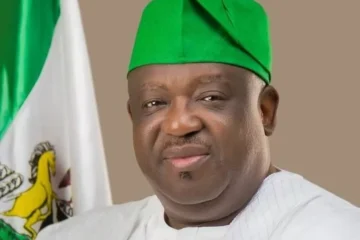
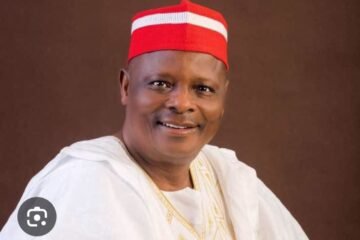
The New Nigeria People’s Party (NNPP) is beginning to fall apart, and the cause is the growing rift between its two most important figures, Rabiu Musa Kwankwaso and Kano State Governor Abba Kabir Yusuf. Kwankwaso is reportedly considering a move to the African Democratic Congress (ADC), while Yusuf is preparing to defect to the ruling All Progressives Congress (APC). With both men heading in different directions, the NNPP is facing the real danger of political extinction. At the same time, the Kwankwassiyya movement, once a powerful political force, risks fading into little more than a memory.
The crisis reflects a problem the NNPP never fully resolved. The party was built around Kwankwaso’s personality, popularity and political ideology, but it depended heavily on Yusuf’s control of state power for survival. Kwankwaso provided the vision, symbolism and mass appeal. Yusuf provided the structure, government access and political resources that kept the party functional.
Once these two pillars separate, both the party and the movement are seriously weakened.
The NNPP was never truly a national party. Its strength, relevance and visibility came largely from Kano State. Kano was not just one of many states; it was the party’s stronghold and its proof that it could win elections and govern. Governor Yusuf was the NNPP’s only sitting governor, and his position gave the party legitimacy and influence at the national level.
If Yusuf defects to the APC, the NNPP immediately loses its only state government. It becomes a party without executive power, without institutional backing and without leverage. Lawmakers are likely to follow the governor, local government chairmen will move with him, and party officials who rely on access to power will not remain behind out of loyalty to ideas alone.
In Nigerian politics, political structures tend to follow power, not sentiment. A party without governors, assemblies or control of any real structure is not rebuilding; it is slowly disappearing.
The Kwankwassiyya movement faces a similar danger. Its strength has always come from a mix of popular loyalty and access to government power. The red caps, the strong identity and the large followership created a sense of belonging, but these were supported by real benefits such as appointments, contracts, empowerment programmes and political relevance. Power gave the movement substance.
If Yusuf takes the Kano Government House into the APC, the Kwankwassiyya movement loses its closest link to power. Without that access, the movement risks turning into a protest platform rather than a governing force. Protest movements can be loud and emotional, but they rarely last long without results. Over time, even loyal supporters begin to question what they gain by staying committed.
Kwankwaso’s possible move to the ADC may help him remain relevant in national politics and keep him aligned with major opposition figures. However, it does little for ordinary Kwankwassiyya supporters in Kano who may suddenly find themselves excluded from government, influence and opportunity. Political movements can survive on hope for a while, but they endure only when they deliver tangible benefits.
The split also causes serious psychological damage.
Kwankwassiyya has always presented itself as united, disciplined and firmly under one leadership. The public disagreement between Kwankwaso and Yusuf destroys that image. Once supporters are forced to choose sides, unity collapses. Some will follow Kwankwaso to the ADC, others will remain with Yusuf in the APC, and many will simply withdraw from active politics altogether.
A divided movement cannot mobilise effectively, negotiate from a position of strength or command respect from opponents. Once political capital is broken this way, it is very difficult to rebuild.
Kwankwaso’s interest in a national coalition with figures like Atiku Abubakar and Peter Obi may make sense strategically. It keeps him relevant and positions him within a potentially strong opposition alliance. However, this national ambition comes at a serious local cost. In Nigerian politics, a politician without a strong home base is vulnerable. Kano has always been Kwankwaso’s political foundation. If he loses real control of the state through Yusuf’s defection, he risks becoming prominent in media discussions but weak on the ground.
When everything settles, the NNPP may exist only in name, remembered more for its symbolism than for its capacity to compete. The Kwankwassiyya movement, stripped of unity and access to power, will struggle to remain organised or relevant. Political history shows little mercy to parties that collapse from internal division. The NNPP was formed as a platform for defiance and alternative politics, but it may end as a victim of ambition, mistrust and conflicting strategies.
The real tragedy is not simply that Kwankwaso and Yusuf are choosing different political paths. It is that, by doing so, they are pulling apart the very party and movement they built together. In Nigerian politics, when a structure collapses this completely, recovery is rare.