








By SHEDDY OZOENE
Every society arrives at moments when it must pause, look back, and decide whether it has done right for those who shaped its path. For Agbajaland, that moment comes again in the next few days as the people gather for the 2025 Agbaja Summit. It comes with another opportunity not merely to celebrate culture, but to confront history with gratitude.
From November 26 to 27, Agbaja sons and daughters will return to Enugu, the Coal City, for the second edition of an event that has quickly grown into a collective reaffirmation of identity. Agbaja, a clan of over 40 communities across five Local Government Areas, has long been held together by ancestry and a deep, stubborn sense of kinship. The maiden edition in 2022 was more than a reunion; it was a rediscovery of purpose.
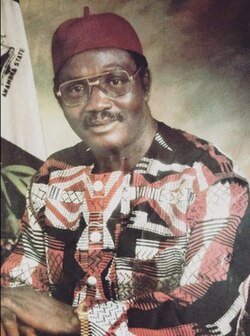
The 2025 Summit carries that rediscovery forward. Its most symbolic moment will be the honouring of three remarkable men whose footprints remain etched across the political and social landscape of Agbajaland: the late Okwuloha, Chief Onyeama Onwusi (Onyeama n’Eke); the former Governor of old Anambra State, Chief Christian Chukwuma Onoh (CC Onoh); and the influential community leader, Chief Goddy Chinze.
These tributes which form the centrepiece of this year’s gathering, are not ceremonial niceties. They are overdue acknowledgements of courage, leadership, and vision.
While eighteen others will receive recognition, these three names rise above the list for clear reasons. Onyeama, the first Paramount Ruler of the Agbaja subgroup, stood at the crossroads of indigenous authority and colonial administration, shaping governance and education at a time when the region’s future was still being negotiated.
Onoh, for decades, embodied political courage — a dogged fighter whose insistence on justice, identity, and fair representation helped give birth to the modern Enugu State. Chinze, though quieter in reputation, laid the administrative groundwork that drove early development across the Agbaja and Ngwo area.
The story of Chief Onyeama is inseparable from the story of Agbaja’s political evolution. His authority stretched across Udi, Ezeagu and beyond; he championed Western education, welcomed Catholic missions, and granted the symbolic approvals that set coal exploration in motion. In a region now synonymous with the Coal City, his place in history cannot be overstated.
Decades later, CC Onoh would carry that torch in a different form. Born in Ngwo in 1927, his political battles were significant. They range from the 1979 governorship election battle with Chief Jim Nwobodo leading up to the Supreme Court, to his eventual victory in 1983 and the short-lived tenure of just three months. They were a study in grit and resilience. As a businessman, politician, and statesman, he was uncompromising in his defence of the Wawa identity.
Chief Goddy Chinze, as Chairman of the defunct Agbaja/Ngwo County Council, drove development projects that still define the area. His impact may not have been loud, but it was undeniable.
Are the 21 men and women selected for this year the only heroes and heroines worthy of Agbaja honours. The answer is no. There are many others who deserve it but did not make the list. The awards for 2025 is just the first step forward in a biennial event that will always have Agbaja Awards as an item on the program.
The Summit itself is the product of deliberate vision. Conceived by the Agbaja Leaders of Thought under the leadership of Professor Chinedu Nebo, it was a response to the hidden fractures caused by administrative boundaries that have scattered the people in as many as five local government areas of Enugu State. The 2022 edition — with its Economic and Investment Forum, its vibrant Cultural Carnival, and its high-profile attendance — proved that the desire for collective identity remained strong.
From the original two local government areas, Agbaja today covers as many as 40 communities in five LGAs: Udi, Ezeagu, Enugu North, Oji River, and Igbo Etiti. Due to administrative adjustments by successive state governments, the people have further spread to Oji River (through Agbalaenyi communities), Igbo Etiti (through Ukehe communities), and Enugu North and Enugu South LGAs (through Ngwo communities) of present-day Enugu State.
Its most enduring achievement was the 12-point Agbaja Development Blueprint, which placed education, healthcare, youth empowerment, environmental stewardship, and entrepreneurship at the centre of community growth.
One of the earliest fruits of that blueprint, the Agbaja Declaration, speaks volumes. After discovering that many children still attended school barefoot and without bags, stakeholders resolved that no Agbaja child should go to school without sandals and a school bag. It was a simple promise with profound dignity.
Little wonder, then, that the 2025 Summit has embraced the theme: “Education and Skills Development — The Pathway to Sustainable Progress.” In a country where the distance between academic learning and practical skills widens daily, the choice is timely and urgent. Governor Peter Mbah’s 2024 inaugural lecture at ESUT reinforced the need for creativity-driven learning, and Agbaja is taking that challenge seriously.
This year’s colloquium will bring together educators, industry leaders, and policymakers to explore vocational training, digital literacy, and youth entrepreneurship. The second day, as always, will return to the cherished Cultural Fiesta — the dance, music, and masquerades that keep identity alive.
But beyond the events and the colour, a subtler question lingers: Can the momentum built in 2022 and 2025 endure?
Professor Chike Anibeze, Chairman of the Planning Committee, believes it can — but only if the Summit’s spirit sinks deep into town unions, women’s groups, youth associations, and diaspora communities.
As Professor Nebo said at the maiden edition, the Summit is “a way to reclaim our place in history.”
There is excitement in the air and it goes beyond Agbajaland. Many of the men and women on the honours list are not champions of Agbaja alone, some are/were indeed, national and global icons.
And as the 2025 Summit approaches, one truth remains unmistakable: a community that honours its past does not merely celebrate history — it equips itself to build the future. That is why the honours for Onyeama and Onoh are not only deserved, but a necessary inspiration for all.